|
These days, there seems to be something of a divide between older gardeners, who still sow a lot of their crops directly into the ground, and new gardeners who do not. The modern trend is to start plants off indoors, or to buy them in pots; I suspect that the reason for this is not that people particularly enjoy growing plants indoors, with all the extra time and expense that it involves, but that when they have tried direct sowing it has not worked very well. The main reasons for this are probably soil quality, soil preparation, and timing.
Soil Quality: This is an issue that is still only just starting to make it into the news, but, now, even agricultural experts admit that decades of inorganic fertiliser use, deep ploughing, and chemical additives has seriously degraded the quality of agricultural soils. To a large extent, the same applies to garden soils in towns and cities, particularly when they have been subjected to a mechanical digger during building operations. Improving soil quality takes time; it is not just a matter of adding organic material, it means restoring the populations of microorganisms, worms, fungae, insects, reptiles, small mammals, etc., all of which help to aerate the soil, and to make nutrients available to the roots of your plants. Making compost, and returning it to the soil, year after year, is the tried and tested way to nurture these populations.
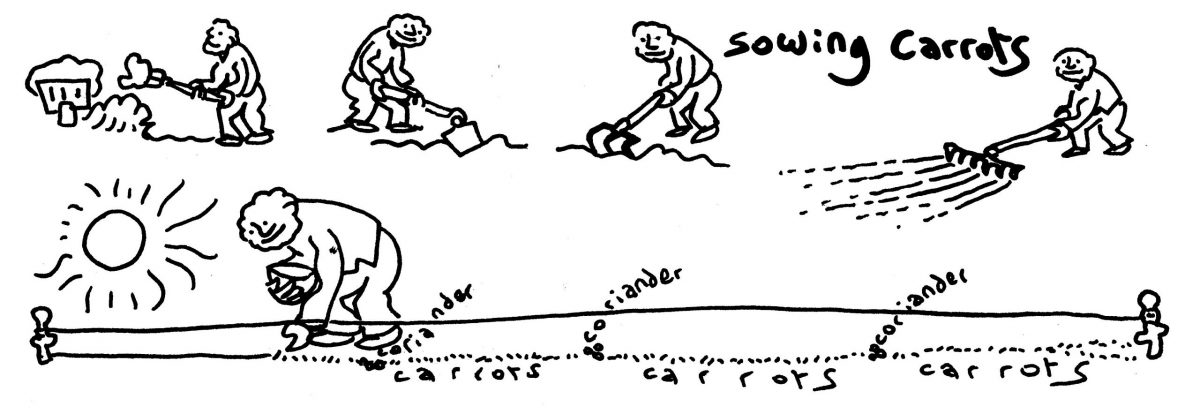
Preparing the Ground: The poorer the soil, the more there is to be gained by preparing the ground thoroughly before sowing seeds. The first task is to clear it of weeds; if you are trying to start a garden on an area that has been left to go wild for a few years, you will probably not be able to get it into a fit state in a single season – you can clear the weeds, but they will grow back, and overwhelm your seedlings before you know it. So start with potatoes, or another vigorous plant, in the first year. Even when clear of weeds, however, poor soils still present difficulties. Soils deficient in living creatures become compacted, and either dry out, or become waterlogged, depending on how much rain you have had. Seeds planted in these conditions do not get the air they need to germinate, and will lie in the soil dormant, or start to rot. Working over the ground several times before sowing, to break up the soil into finer and finer particles, helps to overcome this problem. Over time, if you are successful in working compost into the soil, the amount of work required to prepare the ground should get less from one year to the next.
Timing: Timing is also important. Soils rich in organic material warm up faster in the spring; compacted soils take longer to warm up, particularly when they are waterlogged. Seeds sown in warmer soils germinate sooner, and the seedlings grow faster, and are less likely to be eaten by slugs; it is therefore advisable to resist the temptation to sow seeds during the first spell of sunny weather in the spring, but to wait until towards the end of the recommended planting dates for each crop.
Another factor that can inhibit novice gardeners from sowing seeds directly into the garden, is cost. Seed packets contain relatively few seeds, and it is easy to become discouraged when they fail to grow. Experienced gardeners tend to grow a limited range of trusted crops, and to make a point of saving seeds from their own plants. Most vegetables give an abundant amount of seed, and if you save seed from your garden you don't mind if you sow too thickly, and then have to thin the crop, or if you have to re-sow when you get the timing wrong, and the first sowing fails to grow.
A big advantage of direct sowing is that it allows the plant to develop a stronger root system; this is particularly noticeable in dry weather, when direct-sown plants will keep growing without having to be watered. It is worth persisting, even if you have not yet got the perfect soil.
Gareth Lewis |