Nowadays, people often assume that the term 'subsistence gardening' means growing just enough food to get one through from one day to the next, but that is not, and never has been, the way that it has ever worked.
As a minimum, people have had to take the seasons into account, growing and storing enough in the summer to see them through the rest of the year, and they also need stores to see them through a year when the harvest fails.
Generally, people have also considered that it makes sense to build up a store of a tradable asset that can be sold at a time of political ferment, or family calamity. Most of the wealth of a subsistence farm is stored in the ground itself – the fertility of the soil – and, to a lesser extent, in the buildings; but these assets are not readily tradeable. Generally, the crops themselves can only be stored for a few years at the most, and therefore cannot be used as a long term store of wealth; a notable exception to this being alcoholic spirits distilled from fermented fruits and cereals produced on the farm. In fact, spirits are considered to mature with age, and are worth more after ten or twenty years than when they are first made.
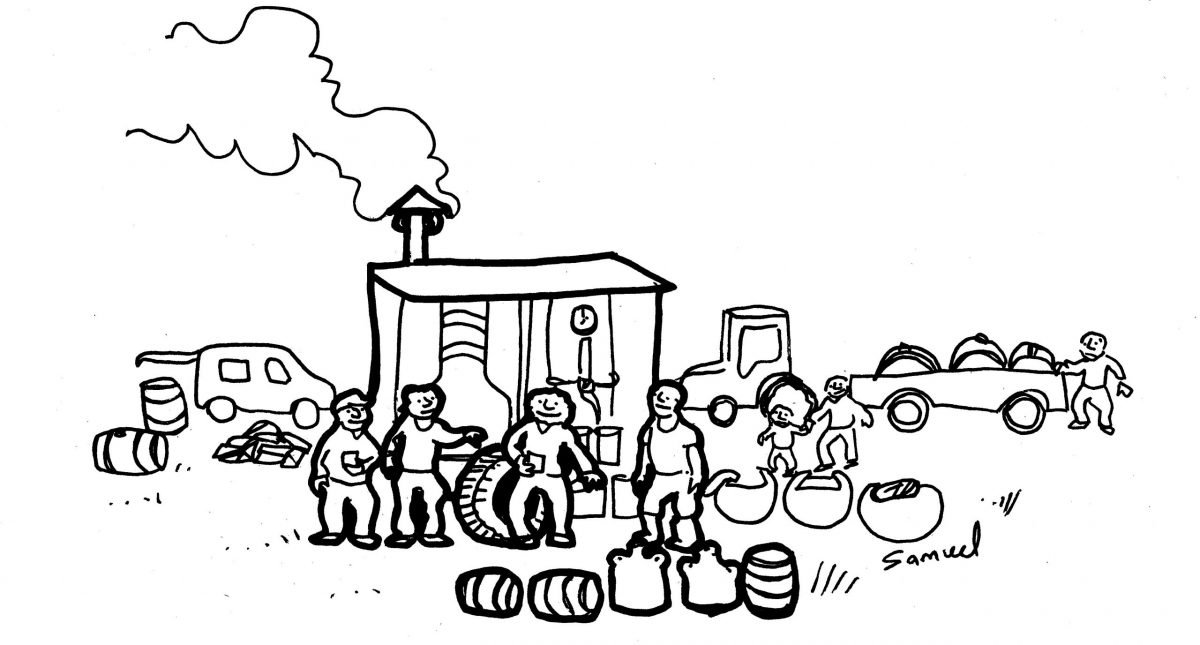
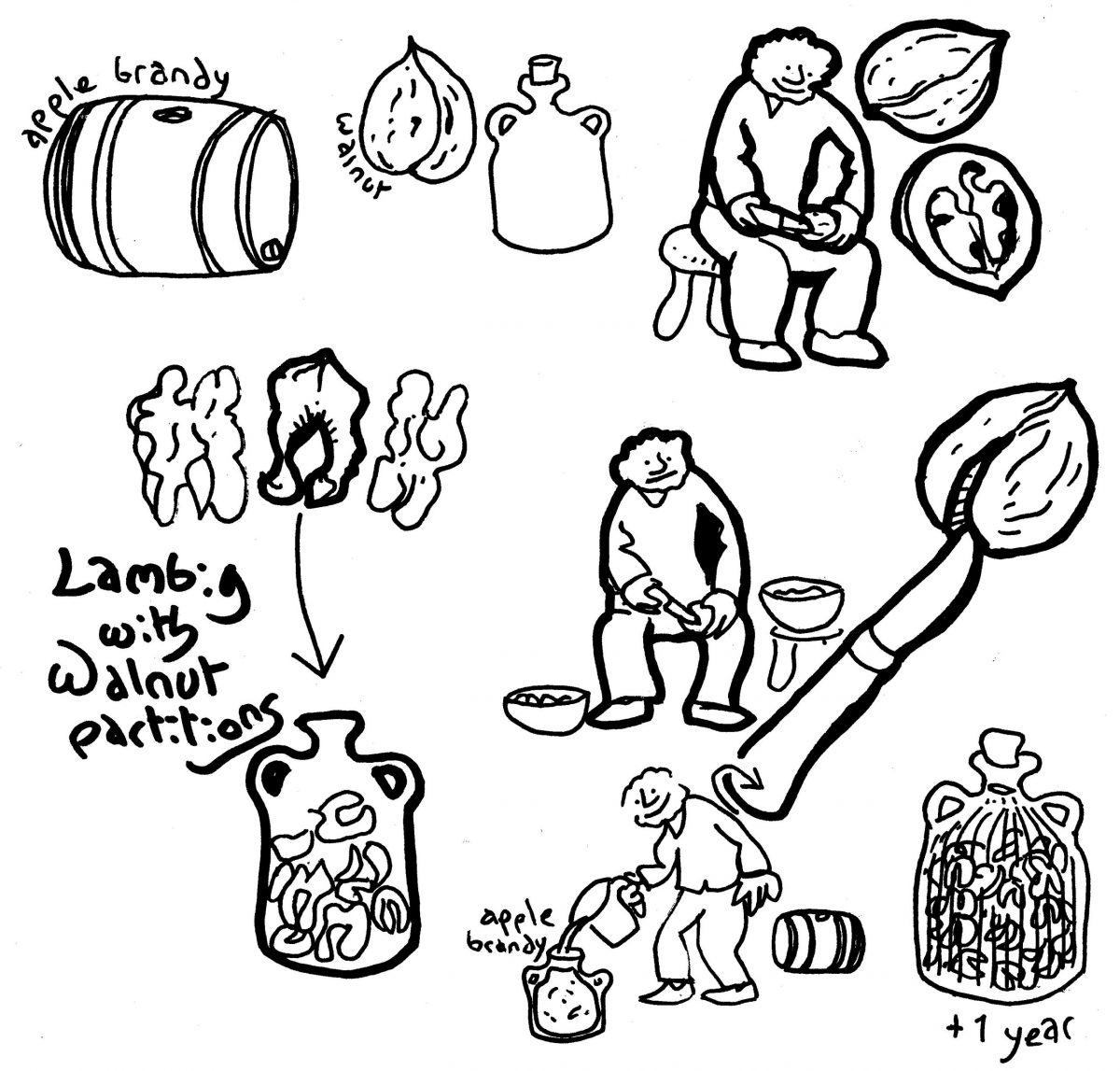
My own experience of the subject dates back to when we moved to Brittany, which is an apple-growing area and still has mobile stills that tour the countryside, converting people's excess cider into apple brandy (known locally as 'lambig', which roughly translates as distillate).
Older people remember a time when taxing the distillation of alcohol was one of the few ways that the government could extract revenue from the small-scale farmers of the region, and recount stories of excise men hiding in the hedgerows, to catch people transporting cider to the still without it being properly declared.
This has all changed in recent years: there are far fewer small-scale farmers, less people make cider, the government has myriad ways of raising taxes, and the mobile stills are now seen as an endangered profession. Restrictions have been lifted, and anyone with a small orchard is allowed to distil a certain quantity of lambig, for their own private use.
Distilled alcohol is not one of the most useful products of the farm (when compared to food, clothing, fuel, and building materials), but it always seems to command a market, and its production is a way of getting value from one's apple crop, particularly when one has had a bumper year. As well as being a store of wealth, lambig was also considered to be a sort of cure-all; a little was added to some honey and hot water to make a grog that was reputed to be a cure for the common cold, and a little was rubbed on aches and strains, or on rheumatic joints.
An indication of how common distilling once was in the area is provided by the fact that it is not unusual to find large stocks of lambig hidden away in old houses when they come up for sale.
|
| |
|
"We trust money, not because we understand it, but because everyone else is using it, and, so far, it has worked" |
| |
It is striking that nowadays stories abound of country people trying to save up gold earned by selling their surplus produce, and how people hid their gold in all sorts of imaginative places, or even wore their gold in the form of jewellery, so that they would always have it with them if they had to flee their homes in a hurry. Gold, of course, does not really have any intrinsic value – even less than distilled alcohol – but it became trusted as a store of wealth because it managed to retain its value over many centuries, and through many crises. The old trust in gold as a store of wealth has now largely been transferred to a trust in money. The value of money was once loosely linked to the value of gold, but that connection is now long gone, and money has become more and more ephemeral, to the extent that it no longer exists in the physical world, not even as numbers written down in a bank ledger. It has become electronic, existing only as data stored in computer systems. We trust it, not because we understand it, but because everyone else is using it, and, so far, it has worked. For most people, all their savings – whether it be a retirement scheme, bank savings, stocks and shares, or the notional monetary value of their property – is tied up with money. On the other hand, subsistence farmers traditionally had a diverse range of assets, including a community, fertile soil, buildings, trees, stocks of food and fuel, and tradeable items, including alcoholic spirits, that could be sold in times of need. In comparison, the modern reliance on financial institutions looks very precarious.
Gareth Lewis
|
| |
|
Feedback & Questions: Leeks
Chicken Poo
I enjoyed your newsletter about leeks. We just had leeks for dinner which are from the garden.
I buy the plants and I put chicken poo in the wee hole before I put the leek plant in.
The old gardener who sells me the leek plants told me how to grow them. The poo is his recommendation and I think it helps. He said to dig a trench to plant them, and as they grow mould them up with soil.
We grow seasonally so look forward to leek time each year.
Christine Broome, New Zealand
Leeks Outside in the Winter
Here (down in a valley, and half in the shadow of the Moron) where we live, one has to store the leeks in an earth cellar over winter!
One year, in the beginning, I bought a lot of leeks from a local organic farmer, and put them in a pot full of sand and earth, and stored it at the wall behind a non-heated wood house. It went well at first – until the first frost without snow with -14 °C ! The leeks became plushy and greasy. I could only save small pieces from them.
Thank you for your informative work and happy midsummer solstice.
Monika Beetschen, Canton Berne, Swiss Jura Mountains
Too Rich for Leeks?
Thanks for the leek tutorial. I am trying leeks for the first time this year. My garden is extremely sandy. I augment it with any rotted manure to hand; this year it was from horses.
My question is, can the land be too rich for leeks?
Gwyneth Grant, Canada
I have to admit that I don't know if the soil can be too rich. We just use vegetable compost, and our soil is clayey. Our leeks are medium size, which works fine for us. I have seen people getting much bigger leeks when they add a lot of animal manure. GL
Children in the Garden
Thank you for the really interesting and enlightening article about leeks. This morning I was planting out some Zebrune shallots that I’d grown from seed and I was wondering if they ought to be watered into their hole like leeks.
Three of the grandchildren had a Sunday afternoon here two weeks ago, planting various things in pots. They are usually quite difficult to pin down for long, but they threw themselves into this with great enthusiasm. The nine year old, especially so. He informed me that he now knows he wants to be a gardener and he will buy my farm. “So far, I’ve got £14.30 in my account!” It’s a start!
Who knows what can be sown in a child’s mind, that might set a course for life. Gardening is so calming.
Paula Middleton, South Shropshire, England
Greetings from Oregon, USA!
I just wanted to reach out and let you know how much I enjoy the newsletters!
I come from a long line of gardeners and have been gardening my entire life (60 years). Every home I've lived in, I've made sure to have a garden spot. I appreciate all of your words of wisdom in your newsletter and enjoy hearing about methods others use in their garden. I also thoroughly enjoy the artwork in your newsletters!
Nancy Bochsler, Mt. Angel, Oregon
|
| |
|
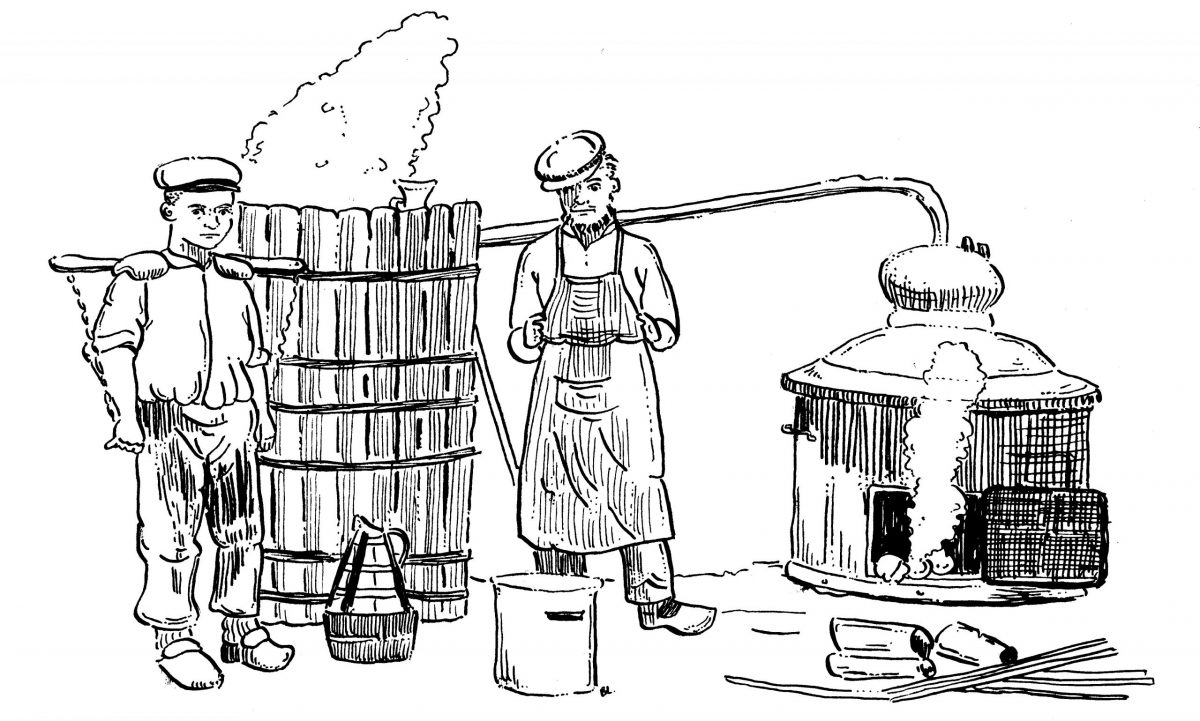
Above: Distilling in Normandy, France, circa 1900. Drawing copied from an old postcard. B. Lewis |
| |
|
Feedback always welcome, send to: info@hoe-farming.com |
| |
|