Growing cereals by hand is an endeavour that gives an insight into many more aspects of life than simply the technicalities of gardening. Firstly, there is the question of why we do not hear more discussion about cereal growing. Most of the debate about the environment is taken up with talking about the relative merits of different sources of energy, whether we should switch to an all-electric world, and how this might affect global warming. When agriculture is mentioned, it is often to do with animal welfare, how to improve working conditions, or how to deal with agricultural waste; and if attention is turned to cereal production, the main thing that people are worried about is the use of nitrogen fertilisers, and most people assume that the organic movement and regenerative farming have a solution to this – it just hasn't been implemented yet. There is very little discussion about whether it is really possible for a small number of farmers to produce grain to feed the rest of the world without doing serious environmental damage to the world in which we live, or whether it is even desirable that they should try. But the fact is, that cereals have underpinned human life ever since the invention of agriculture, and being able to grow a crop of cereals for oneself and one's family has been a mark of freedom and independence for thousands of years. To put it bluntly, a lot of people have realised that they need to have a solar panel if they want a degree of autonomy over charging their phone, but far fewer people have realised that they need to grow their own cereal crop if they are to have control over the environmental impact of their daily bread.
A second point relates to the accumulation of knowledge. We like to assume that once knowledge has been gained, it cannot be lost, and, therefore, that we have available to us today the sum total of everything that human beings have learnt since the beginning of time. One is soon disabused of this idea when one tries to grow cereals by hand. Collectively, our society is still very good at growing cereals; by many measures we are better at growing them than ever before. We grow cereals on land that for thousands of years was not deemed suitable for cultivation, we get spectacular yields, and we can grow wheat, for example, in areas once thought fit only for rye, oats and barley. But we achieve all this thanks to technologies that are far beyond anyone's individual capabilities: it requires tractors, combine harvesters, chemical fertilisers, soil supplements, pesticides, and specially-bred varieties of grain, is overseen by government and industry experts, and is financed by the world's banking industry.
When one simply wants to grow enough cereal for oneself, none of this infrastructure is relevant: your plot of land will be too small for a tractor or for a combine harvester, modern varieties are not adapted to ground prepared by hand, and modern techniques assume an almost complete absence of birds, insects and soil organisms.
|
| |
|
"At some point in our history our society has lost sight of the fact that the far more valuable practical knowledge of how to do things with our hands, in the real world, has to be passed on from one person to another." |
| |
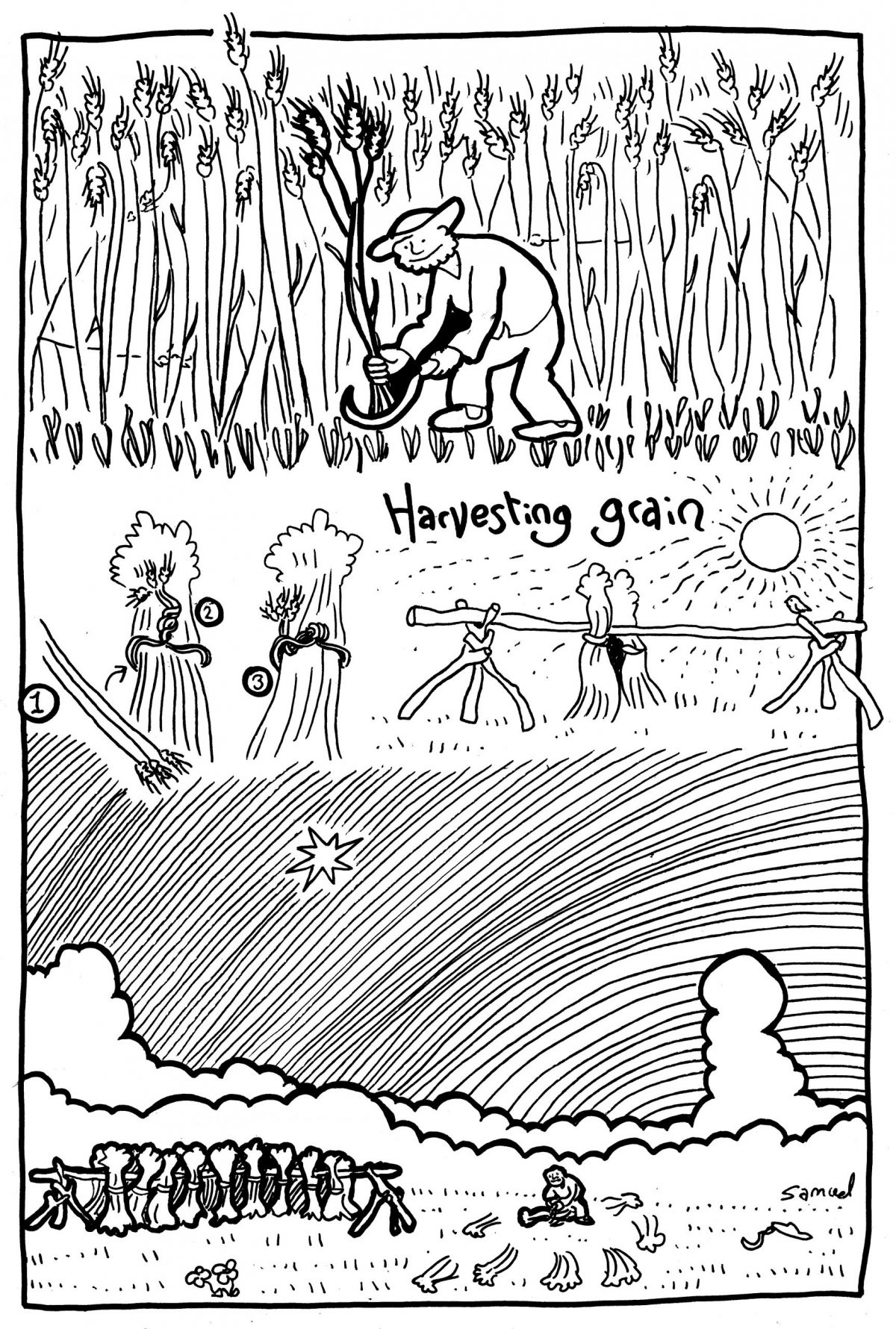
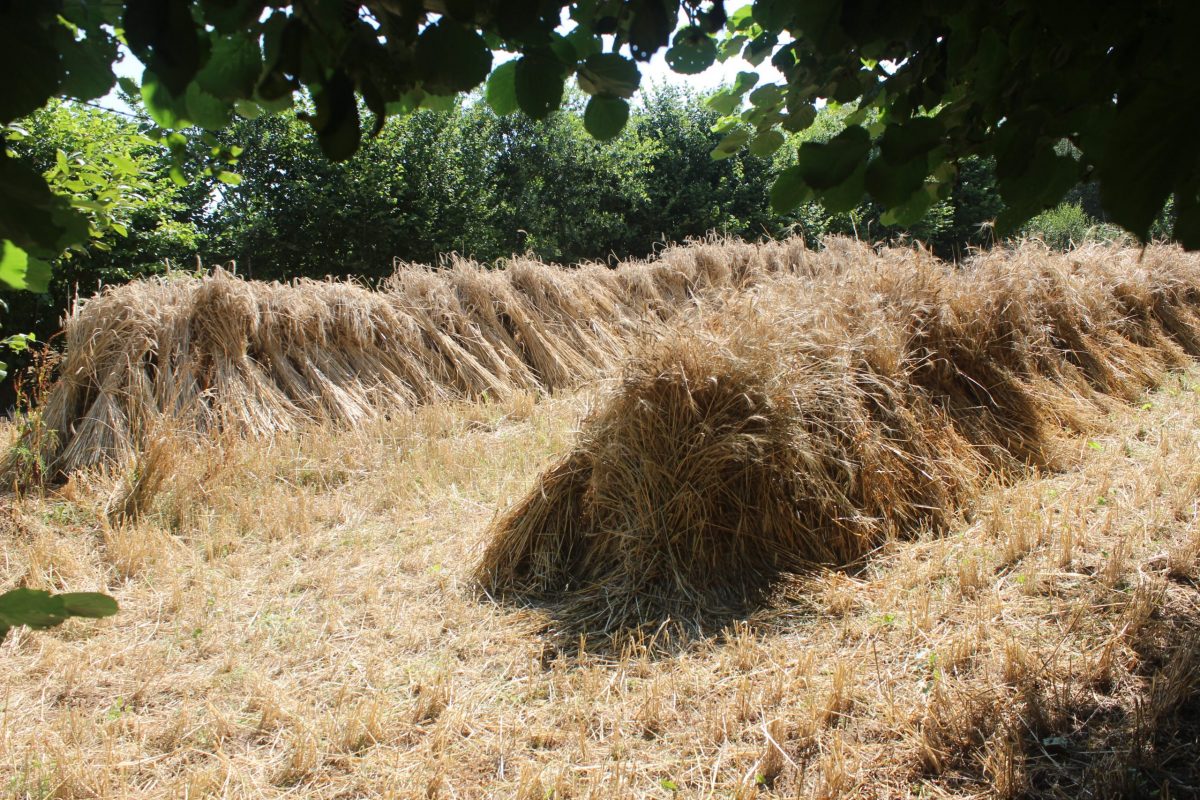
At this time of year, if one has managed to overcome all other difficulties, and one has managed to nurture a crop of cereals to maturity, one is confronted with the question of when, precisely, is the right moment to cut it. Traditionally, cereals were cut before they were fully ripe, and were then tied in bundles, and stood to ripen in the field. When working by hand, cutting takes longer than with a machine, so extra time has to be allowed. If the crop is allowed to get too ripe, it will fall over, and mice and birds will eat all the grain.
Ideally, one would like to have an eighty-year-old living in the village, who had witnessed the same process in the same fields, with the same varieties of cereal, over many years, who could look at your crop, look at the sky, and give their opinion as to the best moment for the harvest to begin.
But the intimate and priceless knowledge of how to grow cereals by hand, in each particular location has been lost.
Perhaps all the book knowledge is being preserved somewhere, in one form or another, but at some point in our history our society has lost sight of the fact that the far more valuable practical knowledge of how to do things with our hands, in the real world, has to be passed on from one person to another.
The good news is that there does seem to be some room for error. If you cut too early, some of the grain will still ripen, and if you cut too late, you still should not lose the whole crop. And the cycle of a human being acquiring knowledge will have started to turn again in the right direction.
|
| |
|
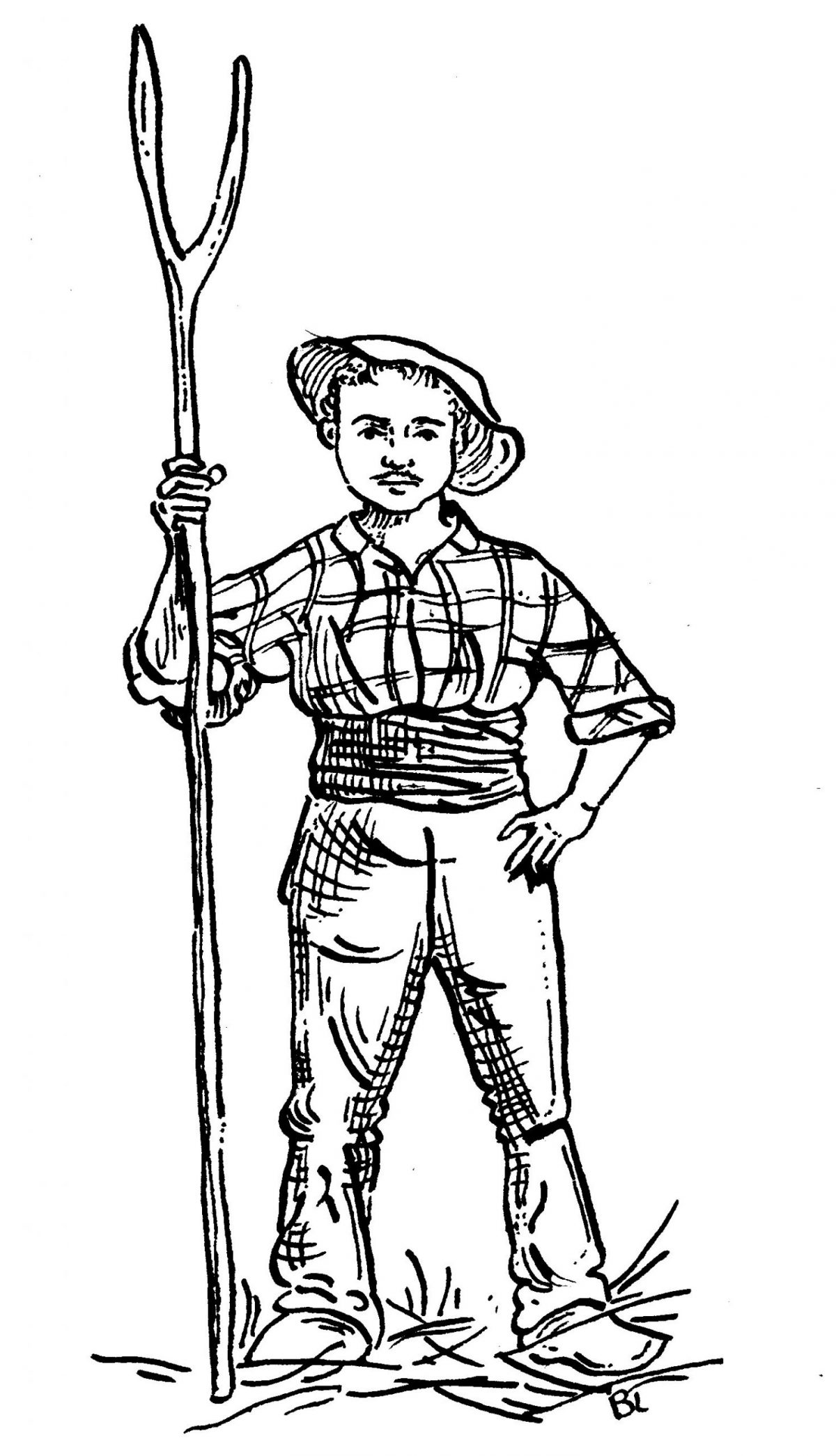
Above: Making Hay. Brittany circa 1900. Drawing based on an old photograph. |
| |
|
Cereal harvest. Wheat and rye drying in the sun before threshing. |
| |
|
Feedback always welcome, send to: info@hoe-farming.com |
| |
|