|
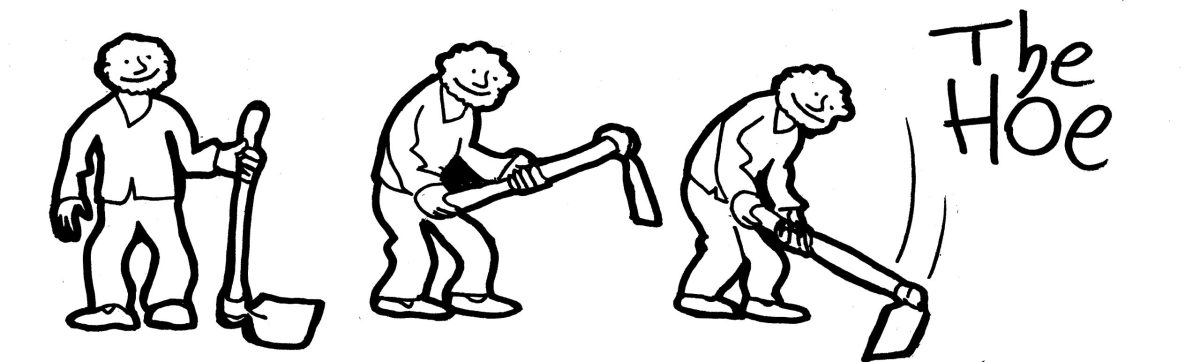
At this time of year we are starting to think about preparing the ground for next year's cereal crop, and, for us, this will involve a few days of work with a hoe.
In our area, the hoe has never fallen completely out of use: sturdy hoes are still for sale in the garden centres, and one still sees older people preparing the ground in their vegetable garden, or earthing up their potatoes, with a hoe – but, overall, even here, people do not appreciate the full potential of the tool.
The most significant development in human history, so far, has been the transition from a hunter/gathering way of life to farming. Some people may like to imagine that the Industrial Revolution has been of equal, or greater, significance, but we all still need to eat food every day in order to stay alive, and that food still comes from farming, not from foraging, and not from an industrial process.
In order to farm, the ground has to be prepared in such a way that seeds can grow and flourish to produce useful crops. The way in which the ground is prepared determines much about what sort of life people are then able to live. In modern, developed societies, the ground is worked with tractors and big machines, farmers need money to buy and operate these machines, and therefore have to sell their produce. We, the customers, have to have money in order to buy the produce, and that dictates a life in which we work for money. Somehow, we never have quite enough money, and the farmers are always under pressure to produce the food more cheaply, which means they need more machinery and bigger farms. This means that fewer people live in the countryside, and more people live in towns, and results in an urbanised society with a centralised system of government.
According to history books, our current machine-based system of agriculture evolved out of European societies that had been working the ground with the help of animal traction since the days of the Roman Empire. Even a relatively small animal, such as a donkey, can work much more ground than is needed by a single family. The emphasis when farming with traction animals is still, therefore, to produce a surplus, and farming in this way fostered the development of the hierarchical societies of feudal and Roman Europe, in which the majority of the population had little freedom, and worked on the land to produce a surplus to feed the ruling classes.
One could argue that it did not have to be like that: each village could have had a horse, it could have ploughed everyone's land, and everyone could have grown a little extra so that the horse could be fed. But that is a complicated solution to a problem that does not exist when people are prepared to work the ground themselves – which brings us back to the hoe.
When we first decided to try to grow a crop of cereals, we were confronted with the same issue of machine vs animal vs hand tools, on a purely personal level. A machine costs money, we did not have a traction animal, and that left us with hand tools, of which the hoe seemed to be the most practical for preparing the sort of area that you would need.
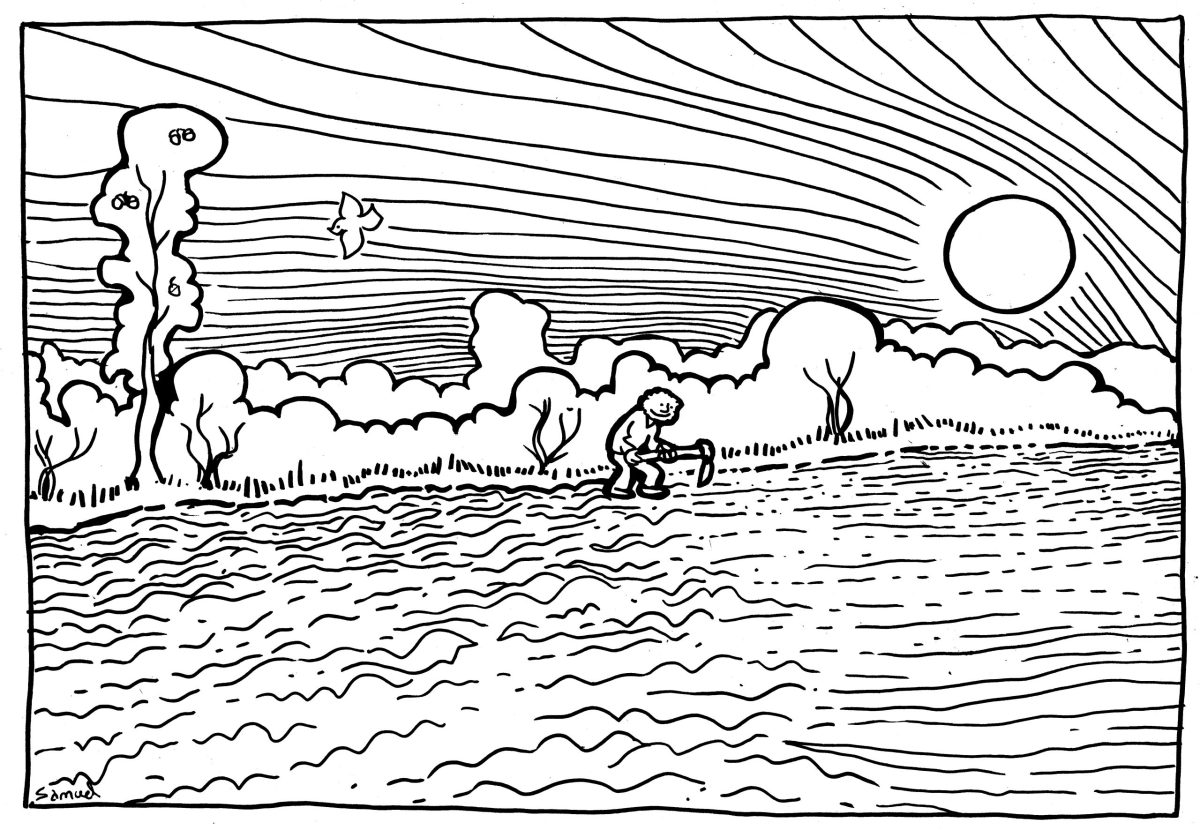
We grow about a thousand square metres of rye each year, which supplies us with our bread. Even during the first few years, when we were having to battle with clods of grass, it was only a matter of a few afternoons' work to get the land into shape for planting (usually following on from a crop of potatoes, also planted and harvested with the help of a hoe), and as time has gone on, the ground has got better, and the work easier.
Having an animal or a tractor may have made the specific task of preparing the ground a little quicker, but it would have deprived us of the pleasure of doing some outdoor work, would not have given us the same connection to our soil, and, overall, would have involved us in extra expense that would only have been justified if we had wanted to produce a large surplus for sale.
Our history books tend to only go back, in any detail, to Roman times, so we have no understanding of how civilisations based upon human beings preparing the ground with a hoe actually work, but the evidence that we do have suggests that people had more autonomy, and that society was less hierarchical, and less centralised. We are living at the opposite end of the spectrum from such a system, but we still have the option to gain a little freedom by picking up a hoe, and preparing a small area of ground upon which to grow a little food for ourselves.
Gareth Lewis |