|
The question of how one should prepare one's soil, how much one should prepare it, and what one should add to it, has become quite an emotive issue over recent years. Mainstream agriculture has taken the course of ploughing to a greater and greater depth with the aid of bigger and bigger machines. This technique buries all the weeds, and also aerates the soil, which would otherwise become compacted due to an absence of organic material – and by being driven over by large machines. The deep ploughing means that the topsoil is buried along with the weeds, and contributes to soil becoming depleted in the nutrients that are essential to plant growth. In terms of bulk of material produced, however, this has not proven to be a problem; scientists have developed ways to analyse the soil, and to work out which minerals are missing, and industry has worked out how to mine and process those minerals, and supply them to farmers. The result has been a steady increase in yields, and a relatively small number of farmers being able to feed an ever-growing world population. From one perspective, this has been a triumph for scientific thought working in tandem with global capitalism.
However, there have always been dissenting voices, and they have been getting steadily louder over time. This type of farming depends on fossil fuels, and fossil fuels are causing global warming; farming in this way is causing a mass extinction of insects, birds, reptiles, and small mammals; food produced in this way is not good for the health; this sort of farming requires the use of pesticides which get into the water system and poison the water, etc. All of which is quite cataclysmic, and has led to an increasing number of people, perhaps a majority, including experts, to conclude that modern farming methods work in the short term, but only at the expense of long-term sustainability, and that, at some point, the system will collapse, leading to catastrophic consequences, unless something is done to establish an alternative.
We are a long way, however, from there being any sort of common understanding of what that alternative should look like, how radical it should be, and how many techniques from the agricultural revolution of the past three hundred years can be retained.
My personal view is that we need to be very radical. The problem is not so much that the scientific way of thinking has in some way been misapplied to agriculture, it is more that the scientific way of thinking is inappropriate when it comes to agriculture.
Instead of analysing our soil to find out which minerals it is lacking, on the assumption that we already know what the correct mineral balance should be, and that it should be uniform across all agricultural soils, we could view our soil as having a complexity beyond our ability to comprehend. From such a perspective, the gardener's (or farmer's) role changes from being a dictator, i.e. forcing the soil to behave in a certain way, to being a nurturer, helping the soil to develop in its own way.
This automatically leads to a no-plough/no-dig philosophy, involving minimal soil disturbance, and helping the ground to generate its own layer of topsoil by carefully recycling organic material produced by the land itself.
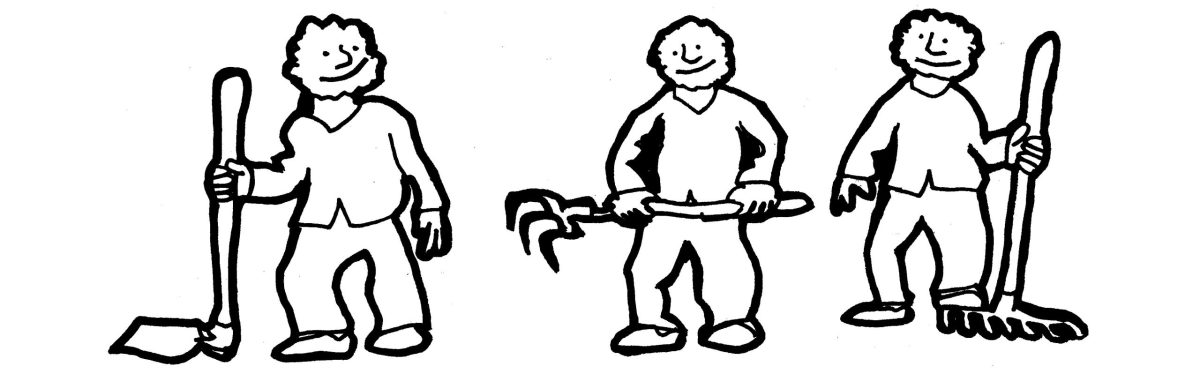
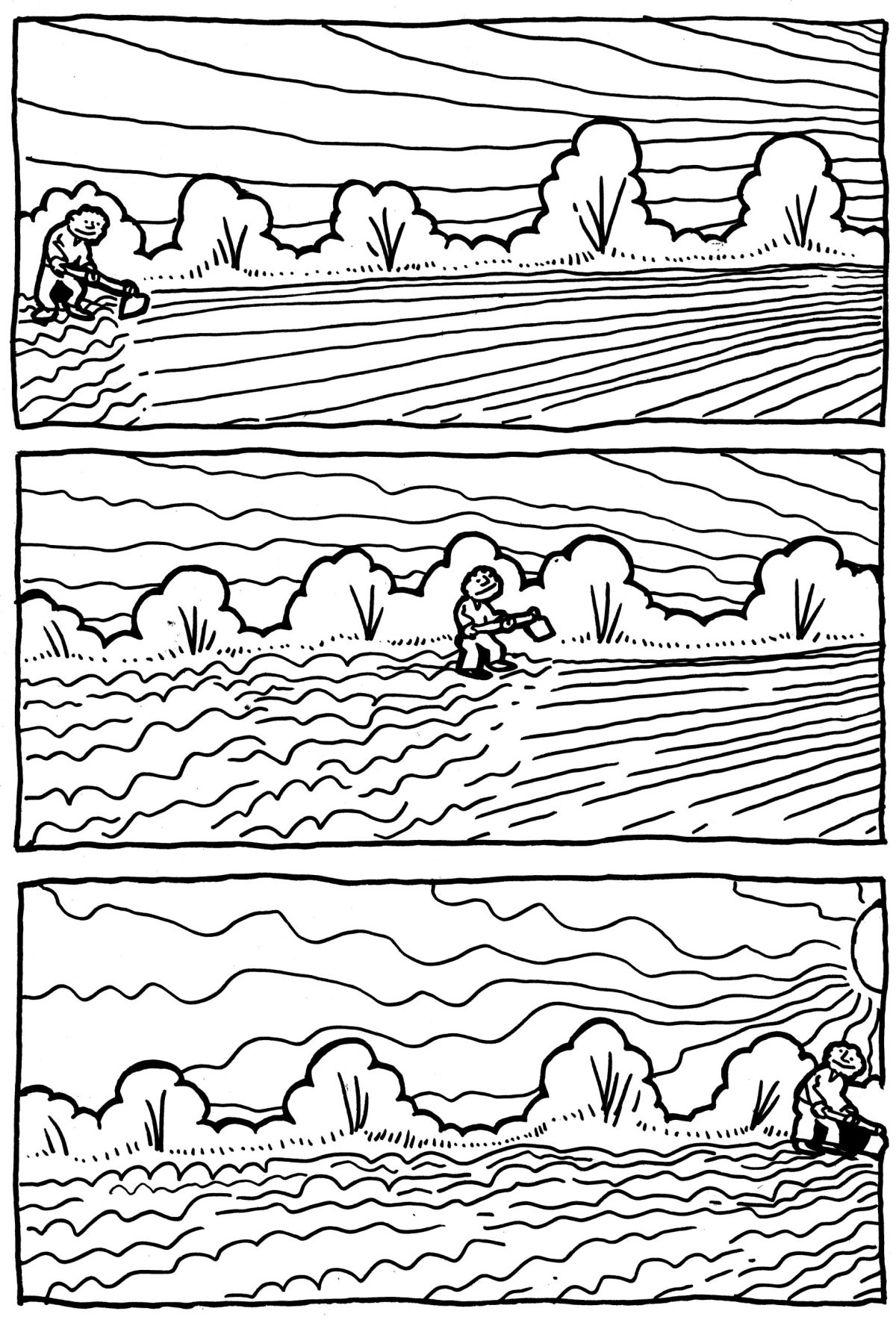
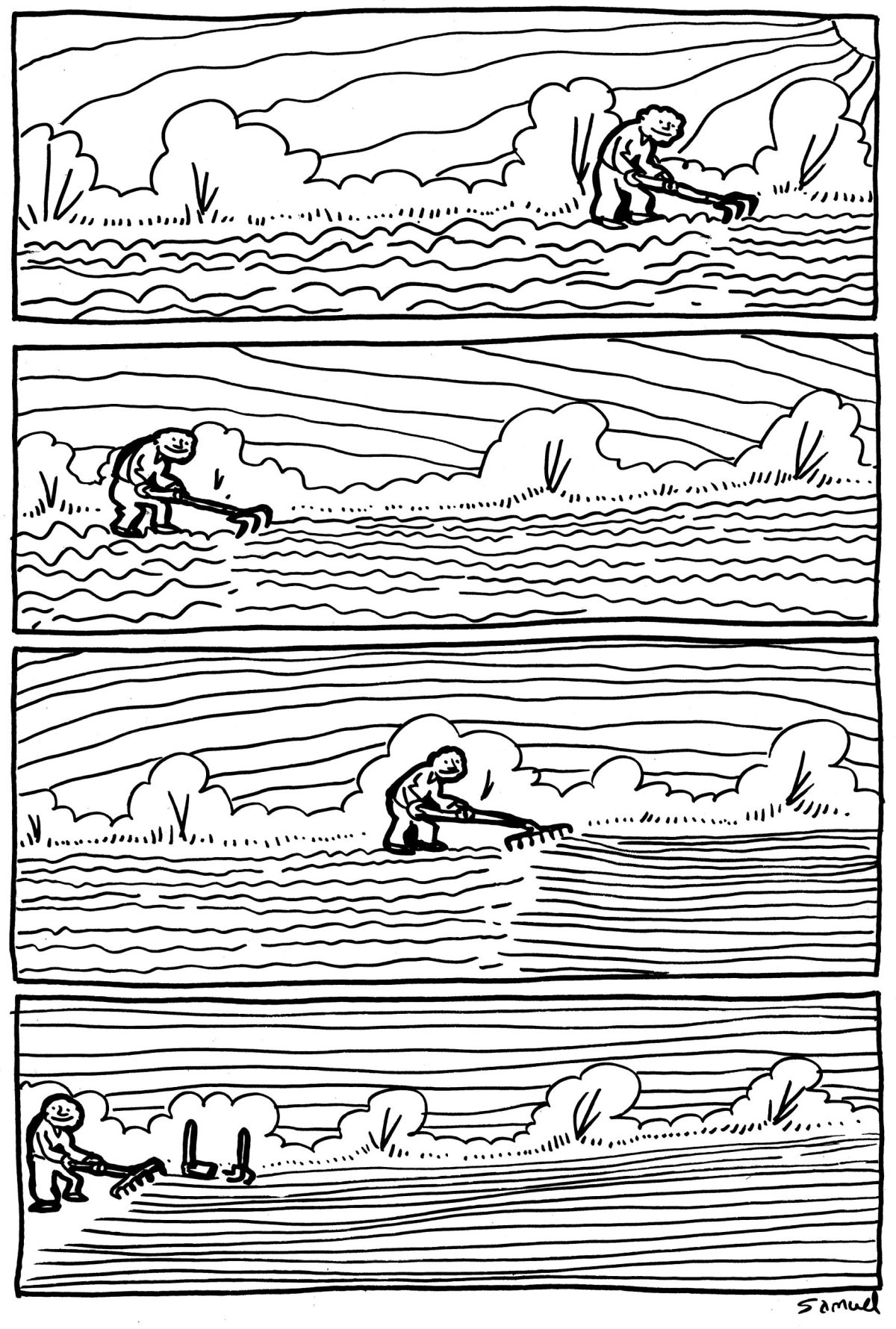
Working with a hoe falls under the no-dig/no-plough umbrella. It only disturbs the top few inches of the soil, mimicking the activity of animals that eat roots and worms, etc. The seeds of many of the plants that one wants to grow are designed to germinate after the passage of a wild boar, or similar animal, through a woodland clearing; working fertile soil, rich in organic material, with a hoe, is therefore creating the ideal conditions for such seeds.
Given that hoe farming has been practised for thousands of years by billions of people, the no-dig, minimal soil disturbance approach to farming need not be seen as experimental, untried, or excessively modern, but it does require a different mindset from modern tractor farming. An important difference is that there is no specific approach that will work consistently across different areas, year in, year out. Each field has to be treated differently: how much hoeing is required, how much mulching, how much compost, how the compost is worked in, which crops are grown, the timing of sowing and harvesting, etc., all varies from place to place, and evolves over time. If there is a set method that works for everyone, it is that each gardener or farmer uses their own common sense, and follows their own intuition. That, perhaps, would be the radical alternative to the current farming system for which people have been looking. |