One of the biggest obstacles to creating a successful subsistence garden is the shared view that most of us have of our history – not only in Europe and America, but also in many other parts of the world touched by colonialism.
The overriding feature of this shared view is that our ancestors, nearly all of whom worked on the land, had to toil away from dawn till dusk, just to scrape out the most meagre living, constantly on the verge of starvation, and rarely escaping from the most abject poverty. A closer reading of historical texts suggests that these types of conditions only existed at certain times, and in certain places – in times of war, and when there was a great disparity between a ruling class and the common people, for example. Specifically, life became very hard for people in the countryside in some parts of pre-industrial, and newly-industrialised Europe in the seventeenth and eighteenth centuries, and it is from this era that many of our ideas about life in the country originate.
At that time, landowners used their power over the rural population to amass wealth for themselves by selling produce from their estates to the newly-emerging urban populations, whilst paying their workers the bare minimum. Over the course of one or two hundred years, European agriculture was transformed; the purpose of farming switched from subsistence to production, and life on the farm started to revolve around how much money could be made in the short term, rather than focussing on sustainability.
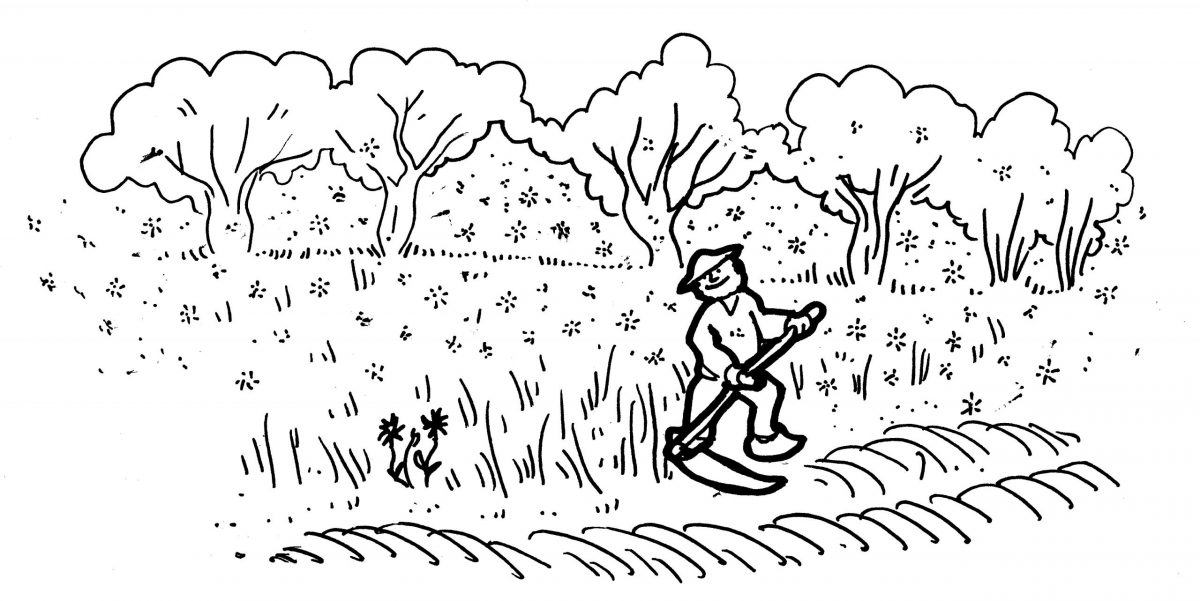
Men, in particular, found themselves having to work long hours, outdoors, away from their families, doing repetitive tasks – ploughing, scything, hoeing, wood chopping, reaping, threshing, etc. - generating huge surpluses, which were then shipped off to the town.
In this environment, everything suffered: women found themselves having to manage the home on their own, children saw less of their fathers and did not have a useful role in daily life, people had less time to care for the sick and the elderly, there were fewer openings for anyone with any form of physical or mental handicap, and no one had time to think about protecting the environment for future generations.
When one takes up subsistence gardening today, one may have to put a lot of work in at the beginning – clearing the ground, cutting overgrown trees, perhaps building a home – but one soon comes to realise that the process of growing food for oneself does not take up an inordinate amount of time or effort, and the object is not to see who can work the hardest and get the most done.
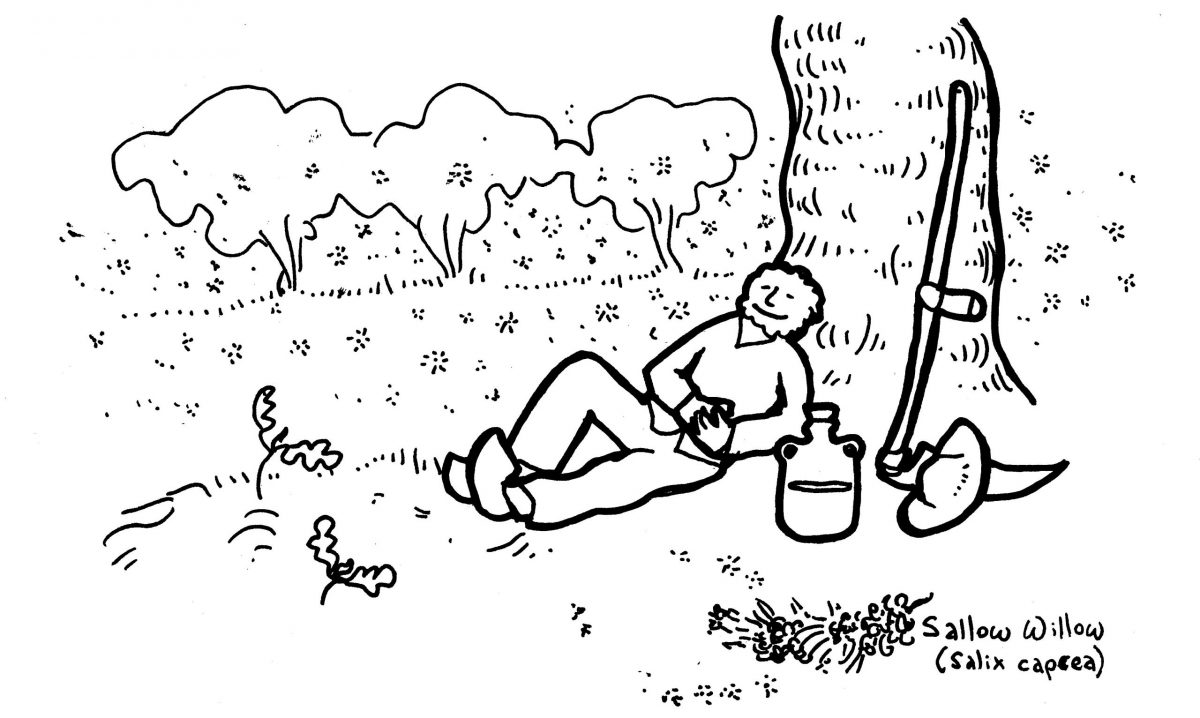
Rather, it is a process of rediscovery, finding out what life was like in the countryside in the forgotten times when people lived at a gentler pace, when people had time to care for each other, when children could be included in the daily tasks, and when there was a useful role for everyone.
Gareth Lewis |
| |
|
Feedback and Questions
Watering
QUESTION: Thank you for the newsletters, the books and the videos. They have been crucial in introducing me to farming by hand.
I want to ask you something about your water. Do your crops rely on a well or on municipal water? I've recently planted peas and einkorn. Today I had them watered because it hadn't rained much. Does the hoe farmer water by hand in your opinion?
Amalia, Blekinge county, Sweden
ANSWER: Where we live, in Brittany, it rains a lot.
The farmers here do not water their crops, and neither do we. However, sometimes we have a few weeks in the summer with no rain, and we water the vegetable garden a little. We have wells that, so far, have not run dry.
I think that with watering, as with everything else, you have to use your common sense – and learn from experience. Of course, climate change is a big worry, and it is possible that things that have always worked in the past will not work in the future if the weather patterns change. It would be nice to think that people around the world will wake up and start working together to share water resources fairly, and stop doing anything that might be contributing to climate change, but I don't know what it would take to make that happen.
GL |
| |
|
Subsistence Gardening ?
A succinct review of this life-style choice and the biggest obstacle to achieving it: land.
My only comment is that "Subsistence Gardener" does not do this life-style choice justice. I think the connotation suggests that you're slogging along and making a meagre go of getting what you can out of your plot of earth. No, for me at least, this is a joyous return and ongoing journey learning how to live with and in the land and coaxing it to give forth its bounty. I can't think of a better name, but I'm going to keep thinking about it.
Rhona Bork, NY, USA |
| |
|
Troublesome Neighbours
Really excellent points; here in the USA, all your observations resonate — except that there are very few places with any community/historical proscriptions of crops, water use, etc. (some exceptions being traditional New Mexico irrigation systems developed long before the 20th century).
But the sad truth is that a smallholding is impacted in many ways by neighbouring landholders; the classic case being complete land conversion into data centres, or solar arrays, and in some places any smallholding may be subject to aerial pesticide spraying to manage regional pests.
This is one of the many problems with moving into a community about which one knows nothing. It may take years before you get a good grasp of the personalities and economic forces, let alone climate and pest problems...
Fred Beddall, Pie In The Sky Berry Farm, MA, USA |
| |
|
How Much Land Do You Need ?
This is very good advice. I have 10 hectares and it needs 10 families, not just one, to steward it. Thank you for your perspectives at this time.
Tam Peirce, Mullumbimby, Australia |
| |
|
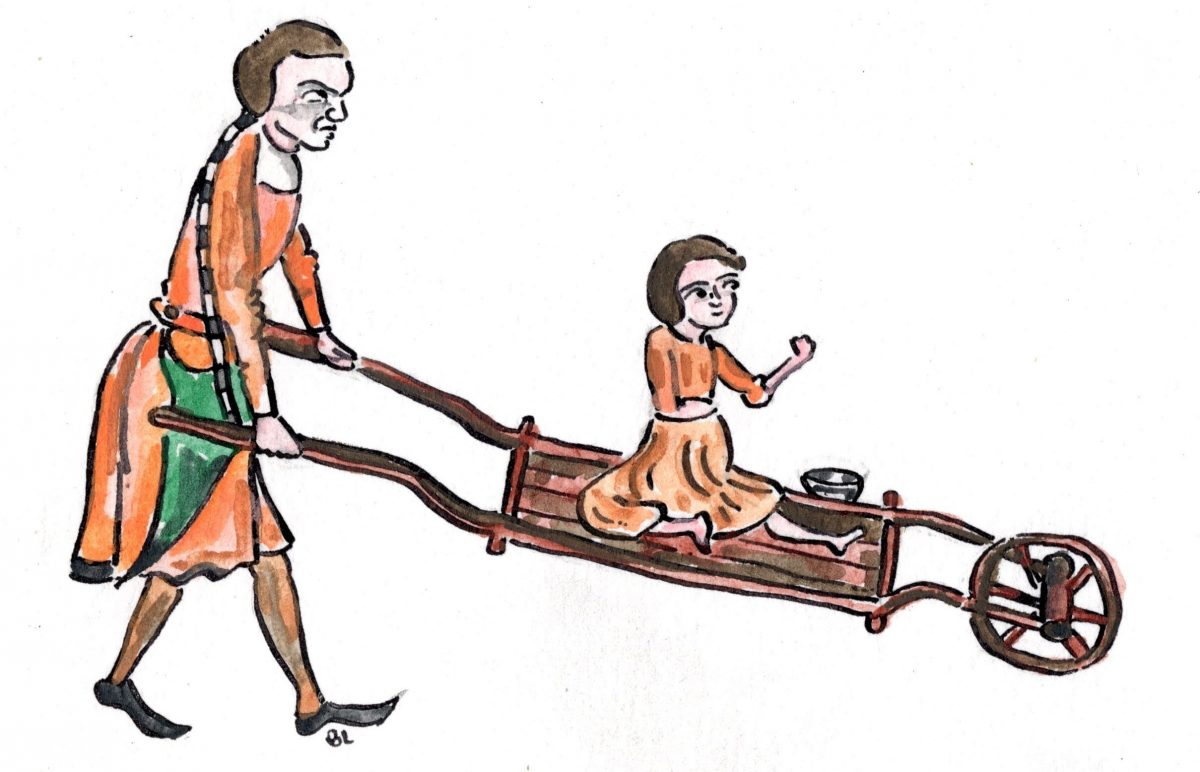
Above: Giving a child a wheelbarrow ride. Drawing by Bethan Lewis based on a medieval illustration. |
| |
|
Feedback always welcome, send to: info@hoe-farming.com |
| |
|