|
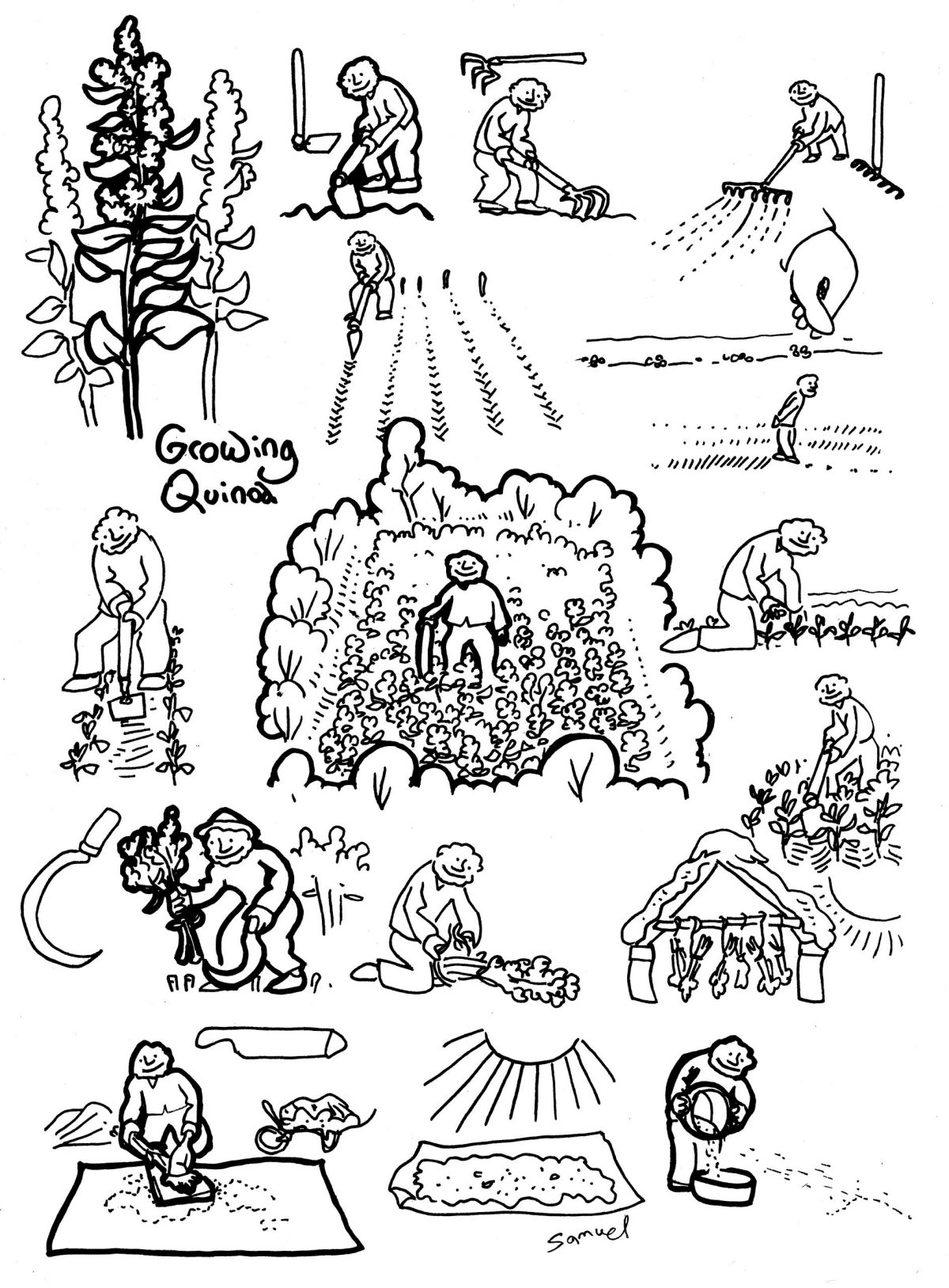
We have been planting quinoa this week. This will be just the third year that we have grown the crop, but we have been pleased with the results for the past two years, when we have grown a few rows in the vegetable garden. We have therefore decided to dedicate a small field (about 150m2) to it this year.
One of the features of subsistence gardening is that there is no advantage to monocropping; it actually makes life easier if each small field has a different crop, because then each task – preparing the ground, sowing, weeding, harvesting, and threshing – is spread out over a longer period of time to accommodate the different needs of each crop. One also has the advantage of having a greater sense of security – if one crop fails, there is still a chance that one of the others will do well. Rye is our main crop (we use it to make bread), we also grow buckwheat (with which we make crepes, or pancakes), and some wheat, but quinoa is interesting because one can cook and eat the grain without having to mill it first. It is also reputed to be a more balanced food than cereal crops, with a higher nutritional value than either wheat or rice.
History
According to scientific researchers, quinoa has been grown in the Andes (in areas now part of Peru and Bolivia) for thousands of years – possibly pre-dating agriculture in the Old World. It seems that the original varieties were specifically adapted to high altitudes close to the equator: areas with short day length, long growing season, and moderate temperatures. Over time, farming spread down into lower-lying coastal areas that are now part of Chili, and people selected varieties of quinoa that thrived in longer days and shorter growing seasons. Fortunately, small-scale and subsistence farming somehow survived more successfully in South America than in the Old World, and many of these different varieties have been preserved by local communities right up until the present day, and are gradually becoming available.
Compared to other crops developed in the Americas before the arrival of Europeans – such as potatoes, maize, tomatoes, beans, squashes, beans, etc. – quinoa was largely ignored by the rest of the world until recently. This may have been partly because the yield per hectare was much lower than for cereals, but also because the superior nutritional qualities of the quinoa seeds was not initially recognised. Most of the world’s annual production is still from relatively small farms in the Andes.
Sowing
You need to find seeds adapted to your area, which generally means buying from a seed supplier in your local country. In subtropical areas, quinoa is grown as a winter crop, in Europe it is sown in the spring for harvesting in the autumn. Sowing seeds from quinoa bought in a grocery store is unlikely to work, as they will probably be from high-altitude varieties, and may have been processed after harvesting.
Weeding
Quinoa seedlings are indistinguishable from fat hen (Chenopodium album). Fat hen is our main summer weed here in Brittany, with its seedlings carpeting the ground after a spring shower, so weeding the quinoa is a problem. So far, we have sown our quinoa in rows, in stations spaced a few inches apart. We hoe between the rows, and hand weed between the stations. As the plants get bigger, it becomes a little easier to tell fat hen and quinoa apart. Apparently, the farming industry has not found a way to control weeds in the quinoa crop, which is the reason why it is still mainly grown on small farms, where it is hand-weeded.
Harvesting
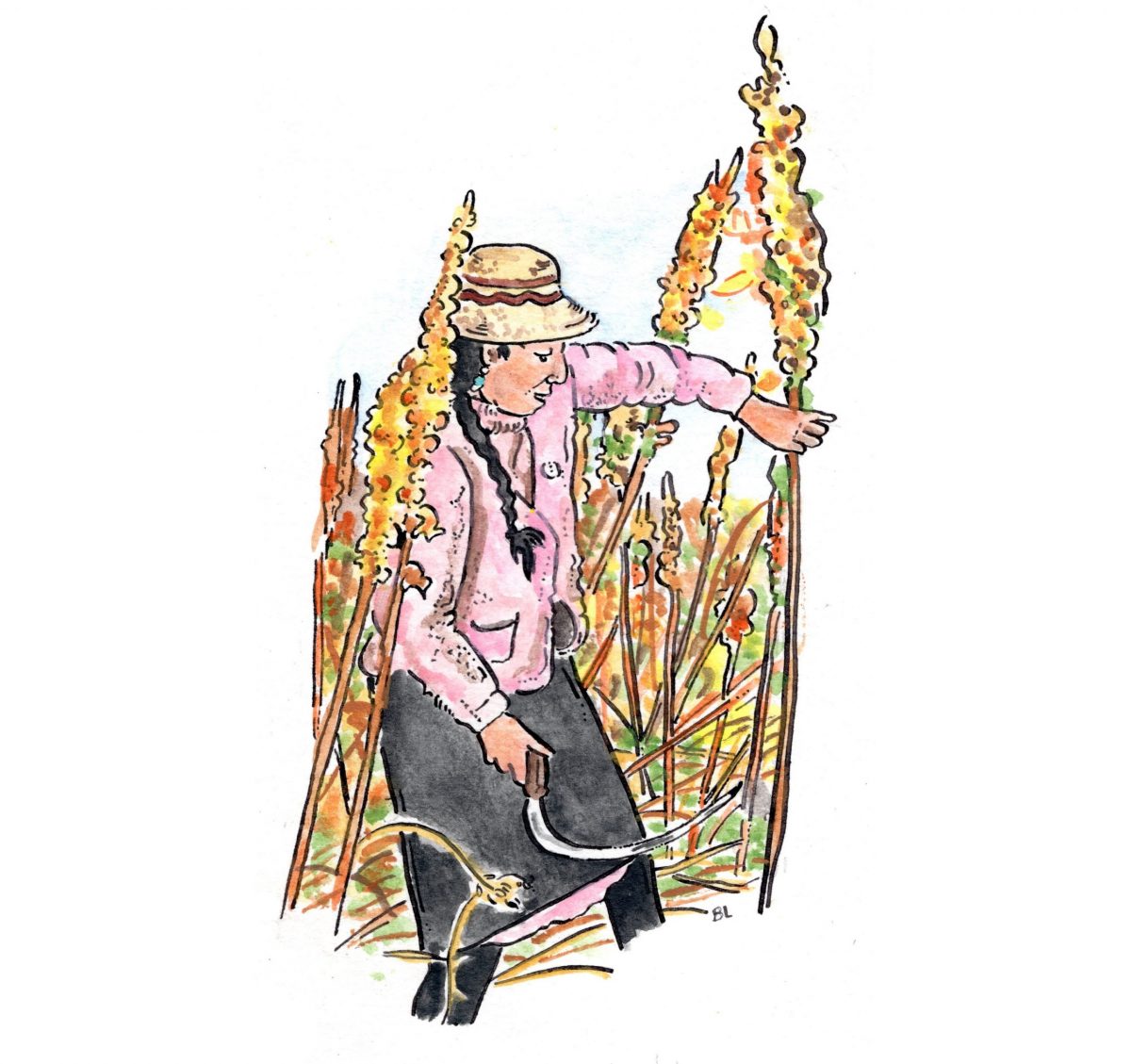
The quinoa plants produce dense seed heads which may fail to ripen properly if the weather turns damp and cold in late summer. To avoid this, we cut the plants, tie them in bundles, and hang them up to dry in an open-sided shed, before threshing. Earlier sowing (March or April) may give the plants more time to mature.
In original quinoa varieties, the seeds are covered with a bitter substance, which has the effect of putting off birds – something that is very important in a smallholding with a dynamic bird life. The bitter substance can be removed by rubbing and rinsing prior to cooking.
|