|
According to local folklore, the last date when one can expect a frost in Central Brittany (where we live) is the 15th May. This coincides with the widespread historical idea that the 'Saints de Glace' (the ice saints), saints whose feast days run from May 11th-15th, were associated with a late spell of cold weather.
As a result, gardeners here tend to base their planting schedules around this date. Whilst native plants are more or less immune to damage from spring frosts, many of the plants that one wants to grow in the garden originate from warmer climates, and are very sensitive to temperatures at or below freezing.
Potatoes
Potato plants are very sensitive to frost. Given the fact that it is difficult to store potatoes for a full year, it is always tempting to plant a row or two of earlies, several weeks before planting the main crop, in the hope of getting a few new potatoes in May or June. These plants are vulnerable to being damaged by late frosts, and they also gives an insight into the complexity of these frosts. Whereas winter frosts are simply a function of cold air, leading to freezing temperatures at night, and sometimes all day, spring frosts can occur when you have quite warm days, but a clear sky and no wind at night. As the night progresses, heat is lost from the atmosphere, and the resulting cold air gradually sinks down to the ground, gathering in pockets, and rolling down slopes. Its temperature may only just dip below freezing just before dawn, making the frost quite ephemeral, and highly localized. The extreme sensitivity of the potato plants makes it possible to trace the progress of a spring frost around one's garden; sometimes just the plants at the end of a row are affected, or those at the bottom of a slope. If frost is forecast, covering potato plants with straw can protect them, perhaps by trapping a little heat from the soil, or perhaps by causing the cold air to pass overhead. More northerly areas (or southerly in the Southern Hemisphere) may have fewer spring frosts because the nights are shorter, and the air has less time to cool down.
Courgettes, Pumpkins, Cucumbers, Gherkins, etc.
The squash family are another set of plants that are very frost sensitive, particularly when they are young, which is part of the reason why they are often started off indoors, in pots, and planted out later on. However, they are also cold-sensitive, and they stop growing if the nights are cold even if the temperature remains above freezing. This is particularly true of pot-raised plants that are planted out too early.
If you have a well-prepared area in the vegetable garden, rich in well-rotted compost (with nothing to attract slugs), and the soil has started to warm up, it is worth trying direct sowings of courgettes, cucumbers, etc. If the seeds germinate, and the weather is favourable, they may catch up and overtake plants that were started off indoors, and are struggling to adapt to life in the outside world.
Beans
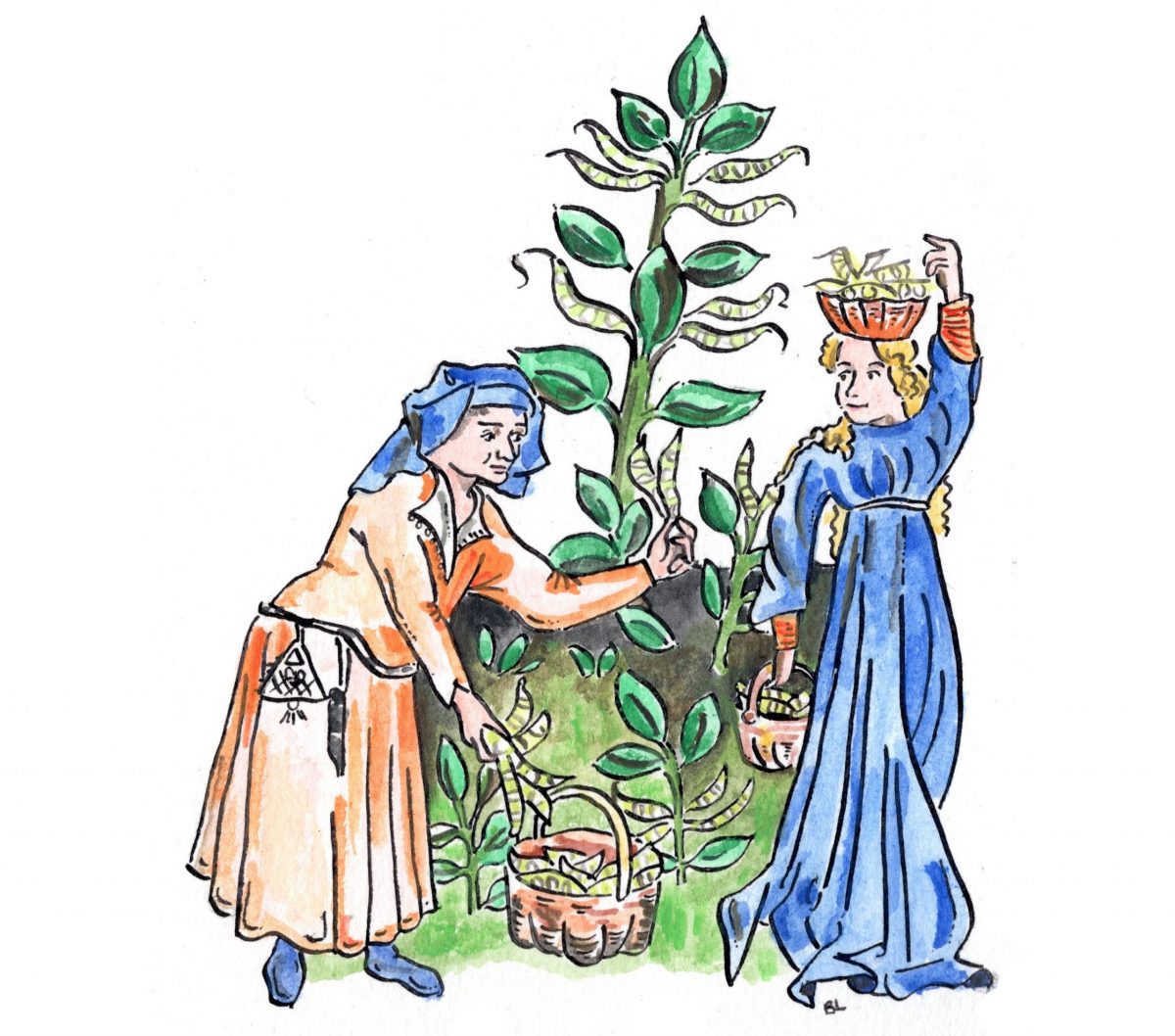
Broad beans, which are native to Europe, are remarkably hardy (in many regions they can be planted in autumn, and will keep growing throughout the winter), but they are the exception rather than the rule. Most beans are sensitive to the cold; they will not germinate in cold soil, and will stop growing if the nights are cold. If you want to grow beans for drying, you therefore have to find a variety that can be planted around now in your area, and which will have produced mature beans before the weather turns cold in the autumn. Green beans and runner beans, which you grow for the pods rather than the mature beans, are less of a problem, and you can still wait a little longer before planting.
Tomatoes, peppers and sweet corn, are other frost-sensitive plants that we grow regularly.
We also wait until after the 15th May before planting some traditional, hardy crops such as carrots and beetroot, simply because, when you sow later, the germination rate is better, the seedlings grow faster, and slugs are less of a problem. Science may have discounted the idea of cold weather occurring regularly in the middle of May, but we have found the Saints de Glace to be good guides to our spring planting schedule.
|