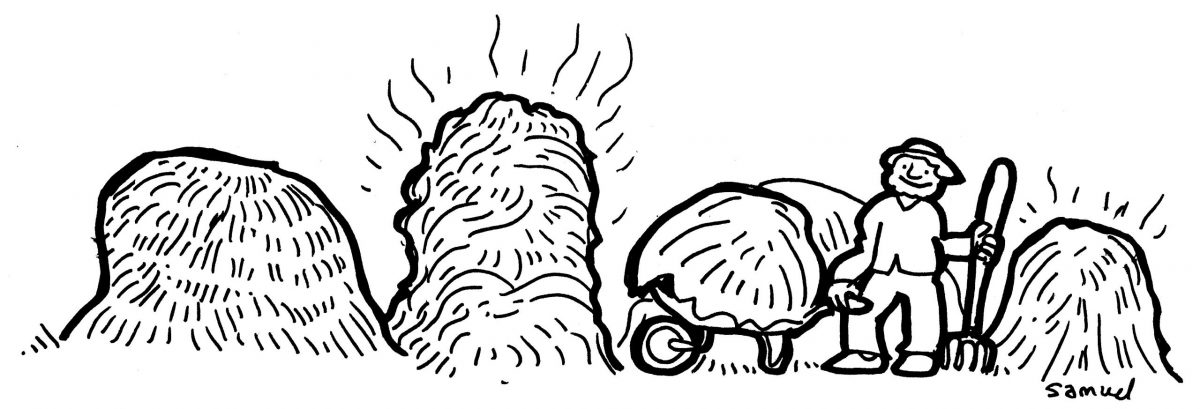
When we had a young family, we moved house several times, and one of the first things that I did in each new garden was to build a compost bin. I cannot remember when, exactly, I lost this habit, but we have never had a compost bin in our current garden; instead, we make piles of compostable material, and turn them regularly.
Aerobic and Anaerobic Respiration
When working with compost, it helps if one can develop an intuitive understanding of the processes that scientists call aerobic and anaerobic respiration. Aerobic respiration involves things being broken down in the presence of air; water and carbon dioxide are the main by-products. Anaerobic respiration involves things being broken down in the absence of air; various acids are the main by-products of this process. Whilst almost all of the microorganisms and creatures living in the heap – bacteria, fungae, worms, insects, etc. – can participate in aerobic respiration, it is just a specialist group of bacteria that thrive in anaerobic conditions, and even they can only tolerate a certain level of acidity before they go dormant.
Turning the Heap
Turning the compost heap from time to time is the simplest way to ensure that air can get into it, and that conditions are therefore favourable for the maximum number of different creatures.
Also, if a heap has gone dormant over the winter months, or during a prolonged dry spell in the summer, it can be reactivated by being turned. Turning the heap does not need to be a scientifically-exact operation. In essence, it just involves moving the heap from one place to another – usually just to one side. In the process, most of the material that was on the outside, and less broken down, gets moved to the inside, along with any weeds that may have taken root on the surface, and the more-broken-down material from the centre of the heap finds its way to the outside, making the heap more homogenous.
Not having the heap in a bin makes it easier to turn, which means that more air will find its way in, and material will get broken down into compost faster.
Too Much Water
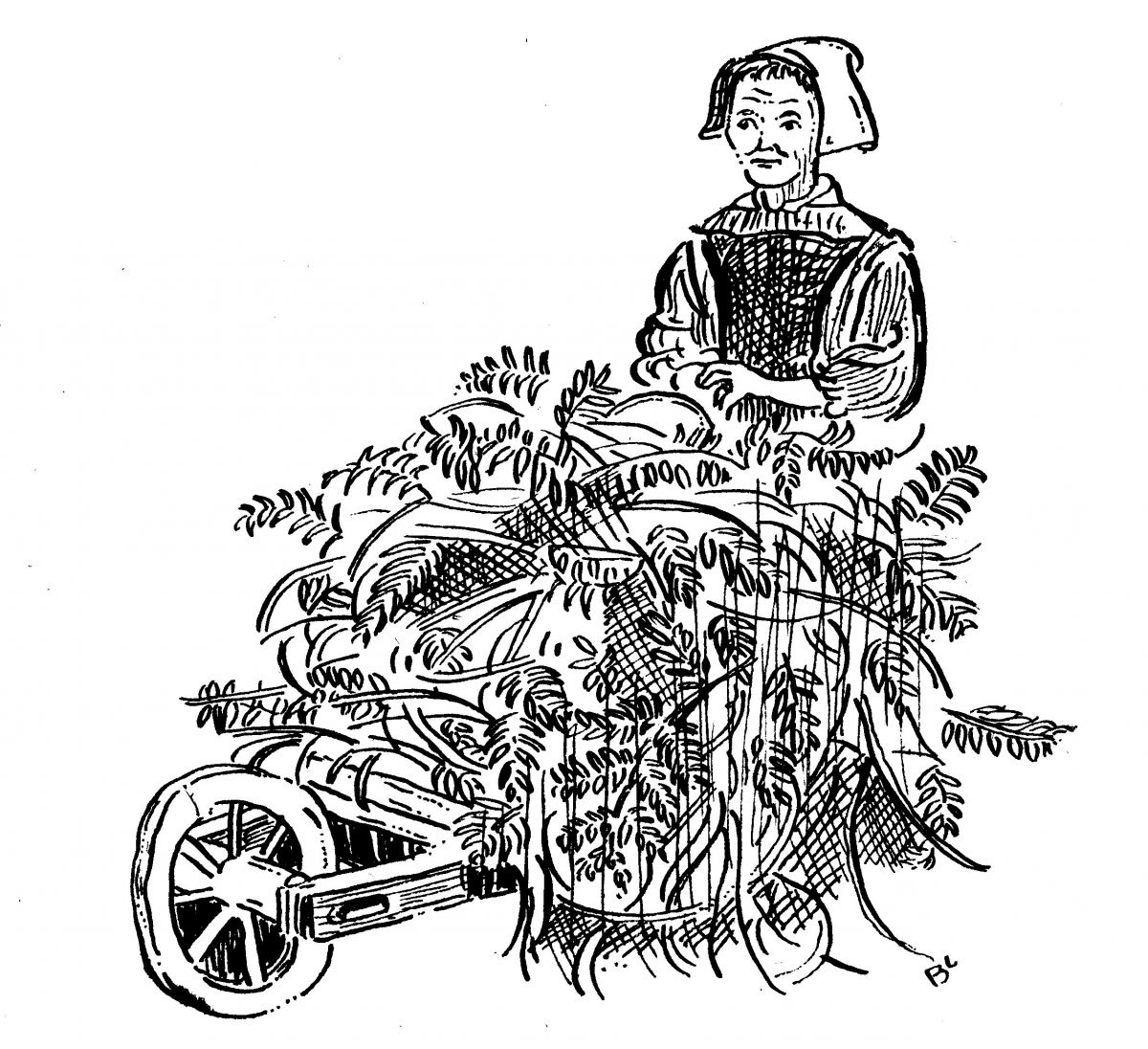
High water content is the main factor that prevents air being able to get into the heap, and this can be a particular problem if you are making a heap from green material in spring and early summer. The early growth of grasses and other meadow plants contains a lot of water, and if this material is cut, and piled up into a heap, it will compact down to form a dense, impenetrable mass suited to anaerobic respiration. The anaerobic bacteria will get to work, the heap will rapidly become too hot and too acidic, and then decomposition will come to a halt.
The acids produced by anaerobic respiration are not actually toxic. When you manage to get air back into the heap, they will be broken down in the normal way. This can be done by mixing the acidic material with an older, semi-rotten compost heap.
Alternating layers of freshly-cut green material with layers of dry material, such as last year's mulch, is a good way to get a heap started at this time of year.
Ultimately, one wants to get composted material back into the soil; but it is not a process that needs to be rushed. We have multiple compost heaps in our vegetable garden, and many others scattered around the land. Sometimes we mix an old heap with new material, and sometimes we spread compost before it is fully decomposed, and then rake it off again when it is time for planting, The whole garden benefits from the presence of active compost heaps; they are reservoirs of all sorts of wildlife, particularly the microorganisms, fungae, and insects that are so vital to the functioning of the garden ecosystem, and the best way to keep the compost heaps active, is to keep turning them.
Gareth Lewis