|
Leeks are one of the Old World vegetables. They are believed to have been first cultivated in the Middle East, and to have been grown by the Ancient Egyptians. It is assumed that the Romans took them to any parts of their empire where they were not already present, and they have remained popular across Europe ever since. Generally, there seems to be less information about which vegetables people grew in the past than about which cereals they grew, presumably because archaeologists have found the remains of grain stores, whereas vegetables leave little trace.
However, very few of the vegetables that we grow today are of recent origin, most were bred and selected from wild plants in pre-historical times, and have been carefully cultivated and preserved in people's gardens ever since – without any of the modern aids that we are constantly urged to make use of by the gardening industry. For Europeans, leeks appear to be one of these vegetables. Growing them alongside more recently-introduced crops, more highly-bred crops, and crops being grown outside their normal geographic range, gives an insight into what life may have been like when gardening was simpler.
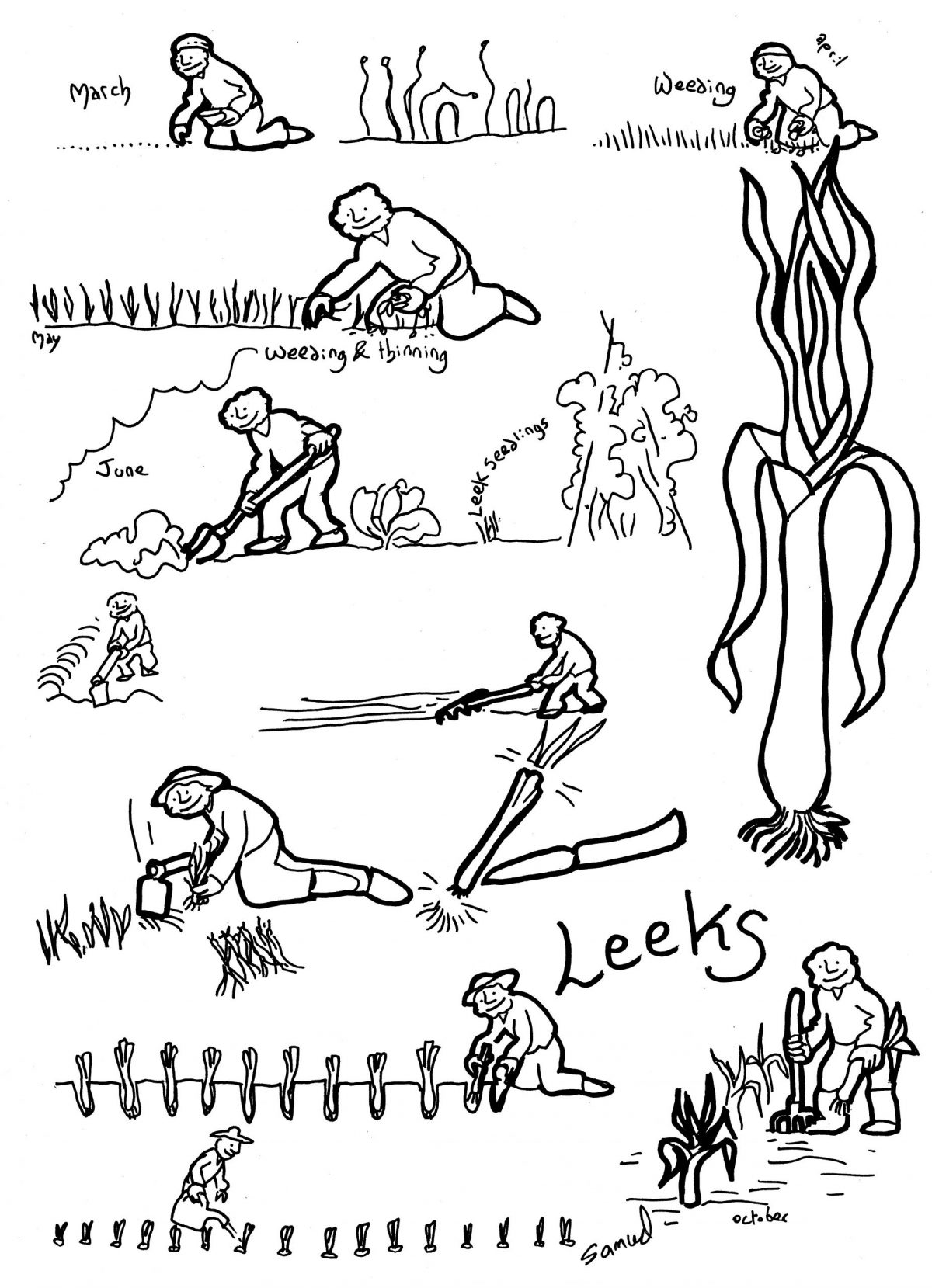
Seeds: Leeks are biennial plants, meaning that they flower in their second year. If you leave a few leeks in the ground after you have finished picking the crop, they will produce tall flower stalks in early summer. Each flower head contains hundreds of seeds; when mature, they can be picked, and dried, and the seed planted the following year. Leeks are one of the easiest vegetables from which to save seed.
Sowing: Here in Brittany, we live in an area where a lot of people (particularly elderly people) still have vegetable gardens in which they grow leeks. Therefore, at this time of year it is common to see people selling bunches of a hundred leek plants on the market. We used to buy two or three of these bunches each year, and found them to be a simple way to fill any gaps in the garden. More recently, however, we have been sowing seeds in March, and growing our own leek plants. We sow quite densely in well-prepared ground in the vegetable garden. So far, this has been very successful; the plants are not as big as those for sale on the market, but they are robust, and grow well after transplanting.
Transplanting: Leeks are traditionally transplanted into holes made with a dibber – one plant per hole. Most cooks particularly value the white, blanched, part of the leek at its base; the deeper you can make your hole with the dibber, the more of this white part of the leek you will get. The roots and leaves are usually trimmed before placing the leek plants in their holes, and the holes then filled with water.
Weeding: Leeks do not usually need a lot of care after planting, but if you can keep the patch free of weeds, the yield will be much higher.
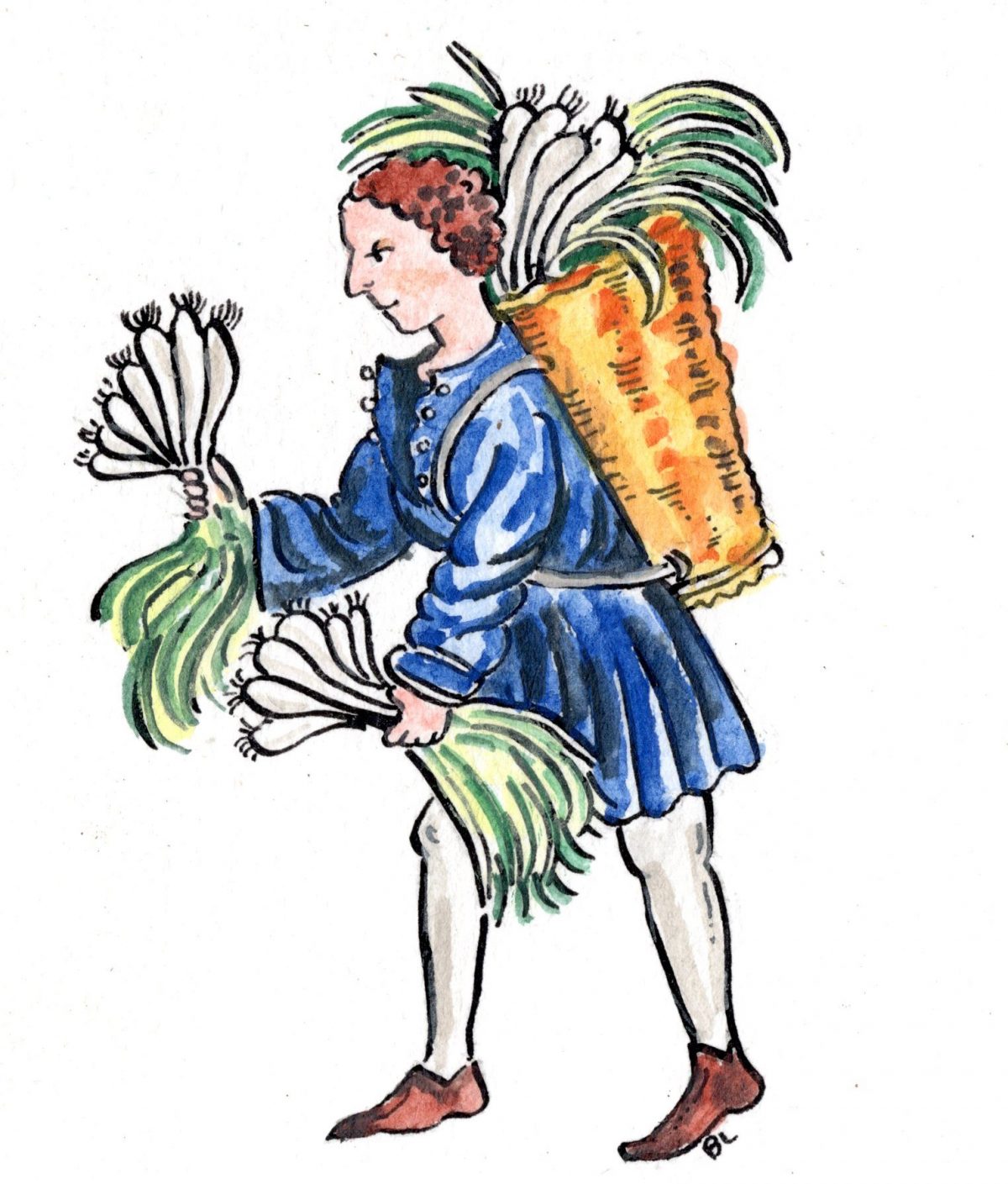
Harvesting: One of the big advantages of leeks is that they are very hardy. They do not have to be stored indoors, but can be left in the ground, and picked as and when they are needed. There are varieties that mature earlier or flower later, but most people grow leeks because they are one of the rare vegetables that can be eaten fresh in the winter, from the New Year, until late spring.
There are pests and diseases that affect leeks, but the fact that they have been grown in Europe and across the Middle East for thousands of years would suggest that, in these regions at least, people resolved any problems that they encountered with good husbandry techniques – crop rotation, working on soil fertility, encouraging biodiversity in the garden, etc. – and it is a worthwhile challenge to try to do the same.
Gareth Lewis |