Water is in the news again in Europe – the continent seems to be heading for one of its driest summers ever (in modern times) and its major rivers are at record low levels. This inevitably raises the question of how water resources can best be managed.
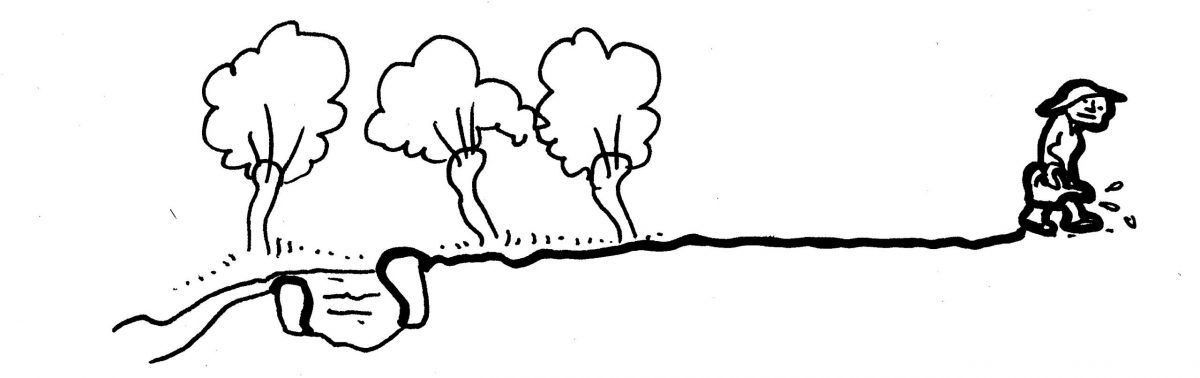
Where we live, in Brittany, there are no substantial mountain ranges with glaciers feeding rivers throughout the year; all our water comes from rainfall. The normal pattern is for it to rain a lot in the winter, and for the ground to become saturated; in the summer there is less rain, and more sunshine, water evaporates from the soil surface, plants draw water out of the ground, and springs feed water into the rivers. This causes the water table to go down, and the level of water in the wells drops as the summer progresses. Depending on the amount of rain that we get in the autumn, the wells reach their lowest levels at some point between September and November, and then they start filling up again.
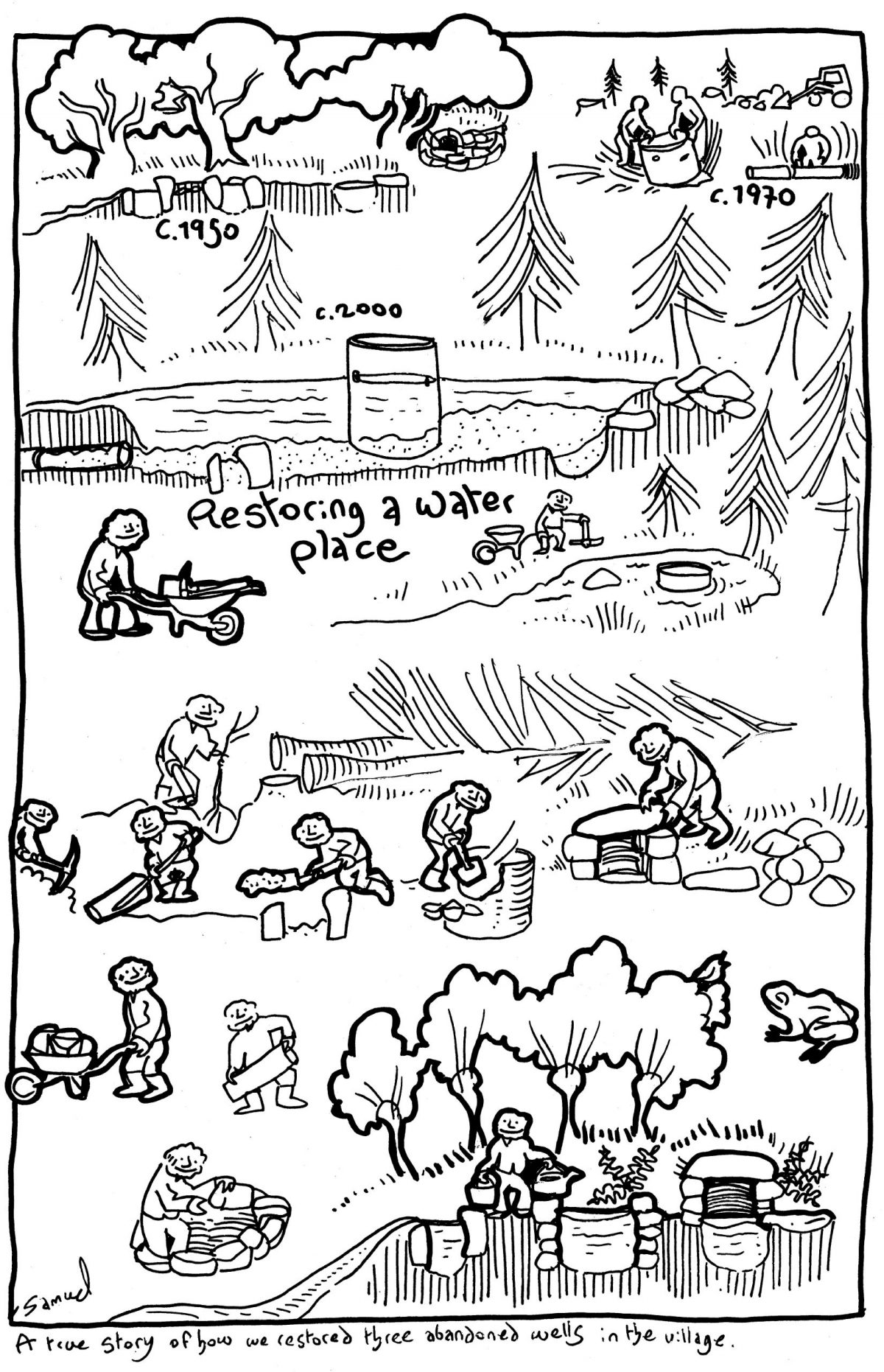
It used to be assumed that this was a time-old process beyond the ability of man to disrupt, but this has not proved to be the case. After the 1939-45 war, an agricultural modernisation programme was adopted; one aspect of this was mechanisation, and this involved taking down banks and hedgerows, so that tractors and combine harvesters could work more efficiently. An unexpected consequence of this was that water ran off the fields more quickly, and many of the old wells, on which people had relied, dried up. In response, rivers were dammed so that the winter rainfall could be stored in reservoirs, and people were supplied with tap water in their homes.
This had the effect of people having to pay for a resource that had once been free. It also made it possible for large farms and businesses to consume more water than was available in their immediate area; this gave rise to an expanded livestock industry, and Brittany became the centre of the French meat industry. The waste from the region's pig and poultry sheds then found its way into the rivers and the sea, where it has significantly affected the marine ecosystem, and caused massive seaweed blooms. Meanwhile, the areas around the reservoirs are now subject to strict environmental control; people farming there have to be registered as organic, and cannot use pesticides or artificial fertilisers, which in some ways may be an improvement on the recent past, but still leaves the impression that the water in the rest of the countryside is not fit to drink.
Having lived in Brittany for over thirty years, I am aware of some of the history of the way that water resources have been managed here over the years, and the resulting consequences. In other parts of the world, the story will have been different. People living beside rivers have always been subject to the activities of people living upstream, and some areas are only habitable thanks to a complex system of ditches and dykes which require a high degree of community cooperation. However, judging by what one reads in the news, there have been problems associated with the management of water resources, comparable to those in Brittany, in many other parts of the world.
Given that, in many cases, these problems are becoming acute, with climate change apparently exacerbating both droughts and flooding, the temptation will probably be to try to find solutions through the use of more technology, and more centralised control.
An alternative would be to try to understand why so many things have gone so wrong in the first place. At least part of the problem must be due to responsibility for water management being taken away from individuals and local communities, and put into the hands of large institutions. When you have to share a well with other people in your village, you have to work out amongst yourselves a system for how much water you can each use. When the water arrives in your house in a pipe, for which you are then charged, you assume that there are water-management experts managing the whole process, and that your responsibility comes down to paying the bill, and obeying the occasional hose pipe ban.
If more people were living in the countryside, growing more of their own food, and managing the trees and hedgerows themselves, they would also be able to take better care of the water, preserving its quality, and adapting how much they used to the amount of water available.
Gareth Lewis