EINKORN - Amalia, writing from Sweden
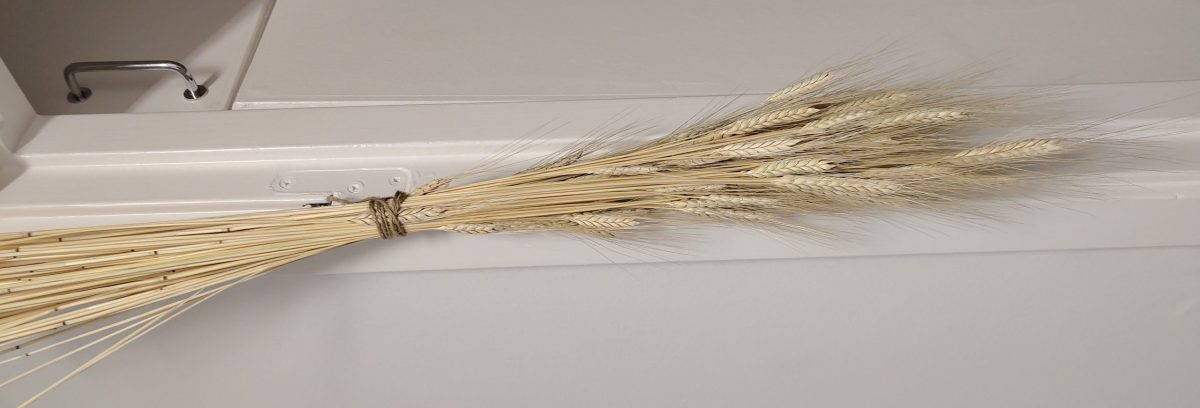
This is the second time I written in to the newsletter – last time I asked about watering einkorn and peas. I was not successful in harvesting my peas, most of them were eaten by wild animals, but my einkorn was successfully harvested, leaving me with a small amount (see picture above). I have a few questions:
1. The chaff is rather laborious to remove by hand, I understand I should thresh it. Do you have any ideas on how I could go about it when the amount is that small? A rock and a paper bag? Getting a tarp and a flail seems excessive.
A. Generally, when you have a small harvest, the best way to process it is by hand. That way, you do not lose any grain. Threshing is for when you have a larger quantity to process.
I have never grown einkorn, but we did grow spelt one year. We were able to thresh the spikelets off the heads, but were not able to separate the grain from the husk. In the end, we took our grain to a farmer who had a machine that could do the job. We have not grown the crop again, because we wanted to be able to process it ourselves.
2. What happens if the chaff is not removed? Could you use such seeds for planting? Would our ancestors chew on the ears and spit out the chaff afterwards?
A. Yes, you can plant the seeds in their husks – it is probably better that way, as it is what the plant intended.
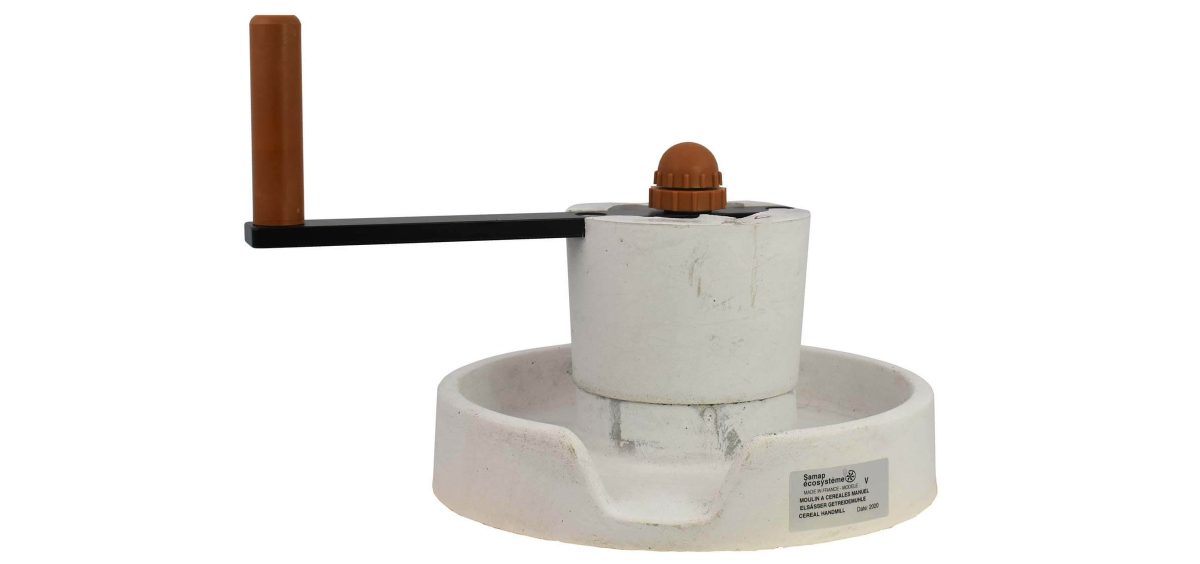
I don't think that anyone knows all the details of how our ancestors processed grain. It is dangerous to extrapolate data collected from a handful of archaeological sites to make assertions about the culinary skills of millions of people living in radically different environments, over thousands of years. What we do know, however, it that our ancestors were extremely skilled in all matters relating to using stones in one form or another to prepare and mill grains. It is believed that people milled einkorn and spelt in a two-step process – the first milling was to remove the husk, and the second to grind the grain into flour.
3. One way wheat is repackaged for us in the supermarket is in the form of wheat berries. Was it an option for people in the past to eat the grains whole, boiled or raw, instead of making bread? What cereals were traditionally eaten this way in lieu of making flour?
A. You can make bulgur with your wheat berries by boiling them for about an hour, drying them, and then coarsely grinding them.(You then have to cook the bulgur.)
So far, we have never grown millet, but I believe that it was once quite popular in Europe. We grow amaranth and quinoa, which, strictly speaking, are not cereals, but the grains can be cooked and eaten whole. If you can separate oats from their husks, you can make porridge.